

With the development of global trade and increasing port logistics demands, port machinery plays an increasingly vital role in modern logistics. As critical equipment for port loading and unloading operations, the efficient and stable operation of gantry grab unloaders significantly enhances port productivity. The hydraulic system, being the core component of these unloaders, directly impacts equipment efficiency and reliability. Due to the system’s complexity and harsh operating environment, hydraulic failures occur frequently, causing numerous operational challenges at ports.
Hydraulic System of Port Grab Unloaders
System Working Principle
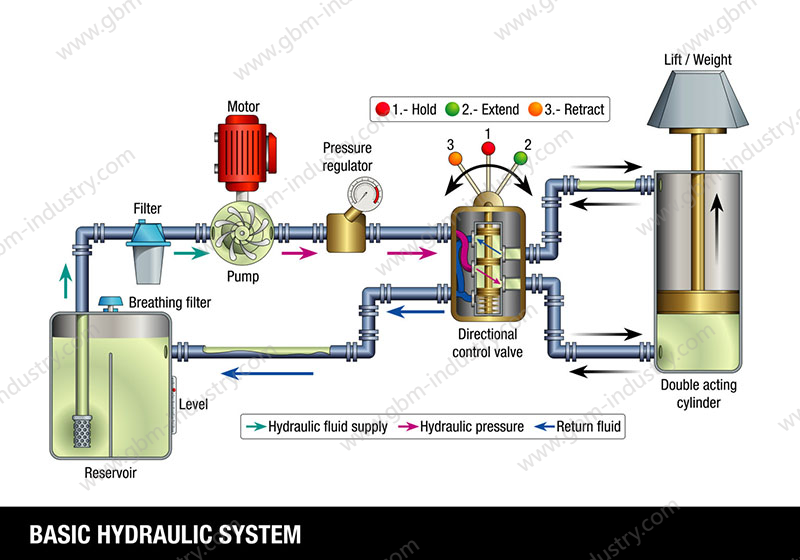
The hydraulic system serves as the power core of bridge grab unloaders, comprising power components, actuators, control elements, and auxiliary components. The hydraulic pump functions as the power source, converting mechanical energy into pressure energy to drive the system. Actuators—including hydraulic cylinders and motors—transform pressure energy back into mechanical energy to operate the grab’s movements. Control components include various valves such as relief valves, check valves, and solenoid valves, which regulate hydraulic oil flow direction, pressure, and volume to ensure system operation according to predetermined procedures. Auxiliary components comprise the oil tank, oil filter, and cooler, supporting system operation by storing hydraulic oil, filtering impurities, and controlling oil temperature.
Its operating principle is based on Pascal’s Law: mechanical energy converted by the hydraulic pump is conveyed through pipelines to the actuators, which then convert it back into mechanical energy to drive the grab. Simultaneously, control components adjust hydraulic oil flow and pressure according to operational requirements, ensuring system stability and efficiency.
The hydraulic system is a complex and precision-engineered system where all components collaborate to achieve precise control and efficient operation of the grab.
Key Performance Parameters
Critical parameters affecting hydraulic system performance include pressure, flow rate, temperature, and cleanliness, which significantly impact system stability and efficiency (Table 1). Therefore, regular replacement of hydraulic fluid and filters is essential for maintaining system stability and extending service life. Proper adjustment of these key parameters effectively enhances hydraulic system stability and operational efficiency.
Common Failure Types and Causes
Hydraulic system failures primarily relate to pressure, flow, temperature, and cleanliness.
(1) Abnormal system pressure may result from excessive pressure due to relief valve failure, excessive pump output pressure, or excessive load. Conversely, low pressure may stem from pump wear, leakage, insufficient oil, or control valve failure.
(2) Abnormal actuator speed and response time may stem from excessive flow due to throttle valve failure, excessive pump output flow, or circuit leakage. Conversely, insufficient flow can result from clogged filters, blocked pipelines, or reduced pump efficiency.
(3) System temperatures that are too high or too low can affect hydraulic fluid performance. High temperatures may result from cooling system failure, excessive ambient temperatures, or system overheating. Low temperatures may stem from low ambient temperatures or heating system failure.
(4) Hydraulic oil contamination accelerates component wear and degrades system performance. Oil contamination may result from filter failure, seal damage, or unclean reservoirs, while excessive impurities stem from inadequate maintenance, delayed oil changes, or internal system wear.
Hydraulic System Maintenance Techniques
Hydraulic Fluid Selection and Replacement Intervals
Selecting suitable hydraulic fluid products is critical for the normal operation of port bridge grab unloader hydraulic systems. Hydraulic fluid replacement intervals are key factors in ensuring long-term, stable system performance. Table 3 outlines recommended replacement intervals.
By appropriately selecting hydraulic fluid products and establishing scientific replacement schedules, system stability and operational efficiency can be enhanced, failures reduced, and equipment lifespan extended.
Inspection and Maintenance of Hydraulic Components
Key components in the hydraulic system include hydraulic pumps, cylinders, motors, valves, reservoirs, filters, and coolers [3]. Their performance directly impacts the overall operational efficiency and reliability of the hydraulic system. Therefore, regular inspection and maintenance of these components are essential measures to ensure system stability. For example: – Hydraulic pumps should exhibit no visible damage or abnormalities, maintain pressure output within normal ranges, operate without unusual noise, and have casings that do not overheat. – Hydraulic cylinders should demonstrate good sealing, smooth operation, and securely fastened connection components. – Hydraulic motors should meet specified speed and torque requirements, with casing temperatures remaining within acceptable limits. – Valves should function normally with reliable sealing performance. The fluid level and cleanliness within the reservoir should meet requirements, the oil filter should provide effective filtration, and the cooler should maintain good heat dissipation.
Regular inspection and maintenance of these critical components can effectively enhance the stability and operational efficiency of the hydraulic system in port bridge grab unloaders, reduce the occurrence of failures, and extend equipment service life.
Hydraulic System Fault Diagnosis and Handling
Diagnosing hydraulic system faults is crucial for ensuring the efficient operation of port bridge grab unloaders. Common diagnostic techniques include pressure detection, flow detection, temperature detection, contamination level detection, acoustic detection, vibration detection, electrical testing, and computer-aided diagnostics. These methods assess system abnormalities by measuring parameters such as pressure values, flow rates, temperatures, contaminant levels, acoustic signals, vibration frequencies and amplitudes at critical points within the hydraulic system, as well as voltage, current, and resistance in the electrical control system. For common hydraulic system failures, corresponding remedial actions can be implemented. These include inspecting relief valves, adjusting pump output pressure, checking loads, modifying pump output flow, repairing circuit leaks, ensuring proper cooling system operation, controlling ambient temperature, cleaning oil tanks, regularly replacing or flushing filters, changing hydraulic fluid, verifying lubrication and tightening connections, and examining electrical components and wiring. Implementing these techniques and solutions effectively enhances the efficiency and accuracy of hydraulic system maintenance, ensuring stable equipment operation and high-efficiency performance.
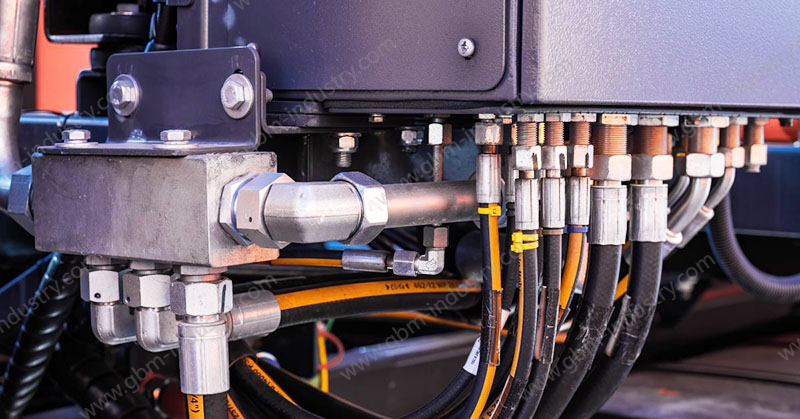
GBM Provides Professional Hydraulic System Support
In summary, as the power core of the entire machine, the hydraulic system of port bridge grab unloaders directly determines the efficiency and safety of loading/unloading operations. From system composition principles to key performance parameters, and common faults involving pressure, flow, temperature, and cleanliness, every maintenance detail impacts equipment lifespan and port production rhythms. Maintaining hydraulic systems relies not only on routine inspections and upkeep but also on precise selection of hydraulic fluids, control of replacement cycles, and accurate prediction of potential faults. In complex and harsh operating environments, traditional reactive maintenance approaches alone can no longer meet modern ports’ stringent requirements for equipment availability.
As a technical service provider deeply rooted in bulk cargo handling equipment, GBM fully understands the critical role hydraulic systems play in grab unloader operations.
Leveraging extensive field experience and a specialized technical team, GBM provides clients with full lifecycle services ranging from routine hydraulic system maintenance to emergency repairs. For typical failures mentioned in the article—such as high-pressure relief valve malfunctions, pump wear and leakage, pipeline blockages, and oil contamination—GBM has established standardized diagnostic procedures. Using professional testing equipment, we conduct quantitative analysis of system pressure, flow rate, and cleanliness to precisely pinpoint root causes. Regarding repair services, GBM not only possesses on-site repair and replacement capabilities for hydraulic components (such as cylinders, hydraulic motors, and various control valves) but also strictly controls spare part quality to ensure compatibility and reliability with the original system.
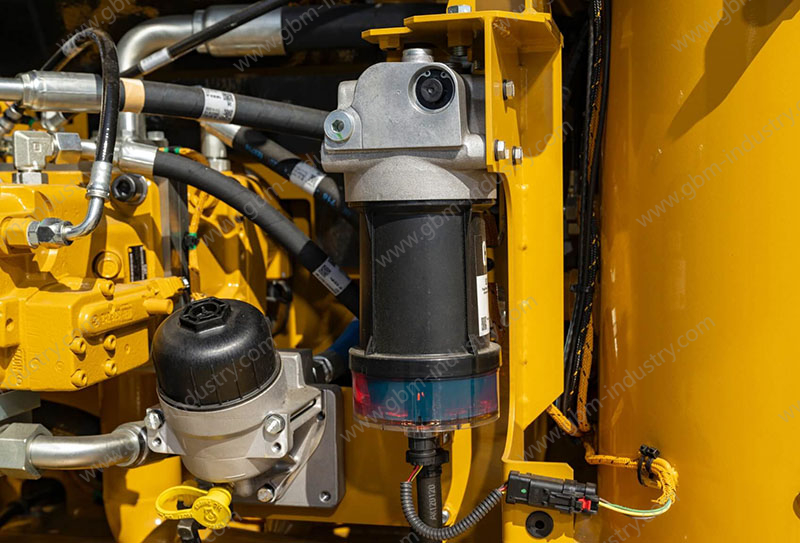
For maintenance services, GBM develops customized hydraulic oil change schedules and filter maintenance plans tailored to each port’s climate conditions and operational intensity. Comprehensive periodic inspections of reservoirs, coolers, and seals effectively prevent system performance degradation caused by oil aging or contaminant ingress. Additionally, GBM offers operator training services, equipping port drivers and maintenance personnel with essential knowledge on daily hydraulic system inspections and emergency response procedures. This proactive approach minimizes hydraulic failures stemming from operational errors or maintenance oversights. Choosing GBM’s professional hydraulic system maintenance services adds a robust layer of assurance to the stable operation of bridge grab unloaders, empowering ports to achieve more efficient and safer routine operations.