

Custom Solution for Brazilian Logistics
Every bulk handling operation tells a unique story. For our client in Brazil, that story involved pet coke—a challenging material that demands robust equipment—and a logistical puzzle: how to feed a ship loader efficiently using only truck deliveries. We are pleased to announce that GBM has successfully installed a custom-engineered solution on-site, now ready to handle 1,000 tons per hour with precision and reliability.
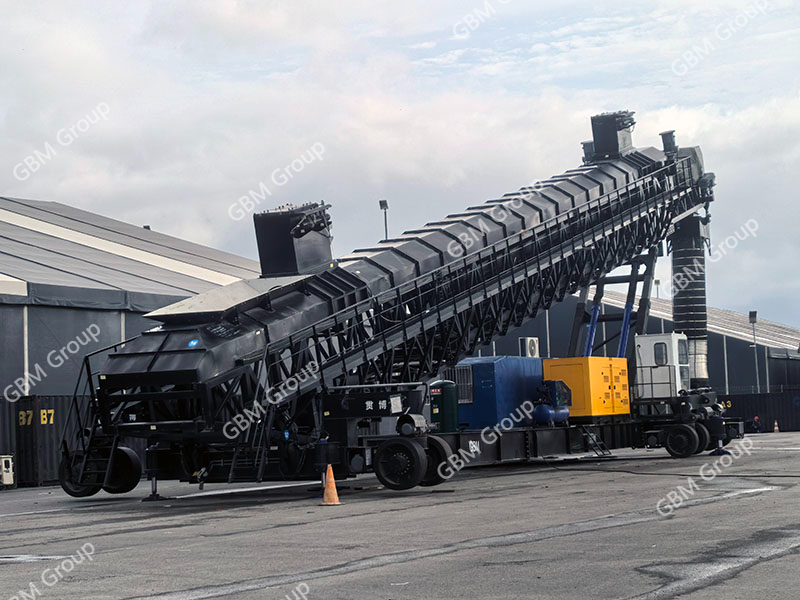
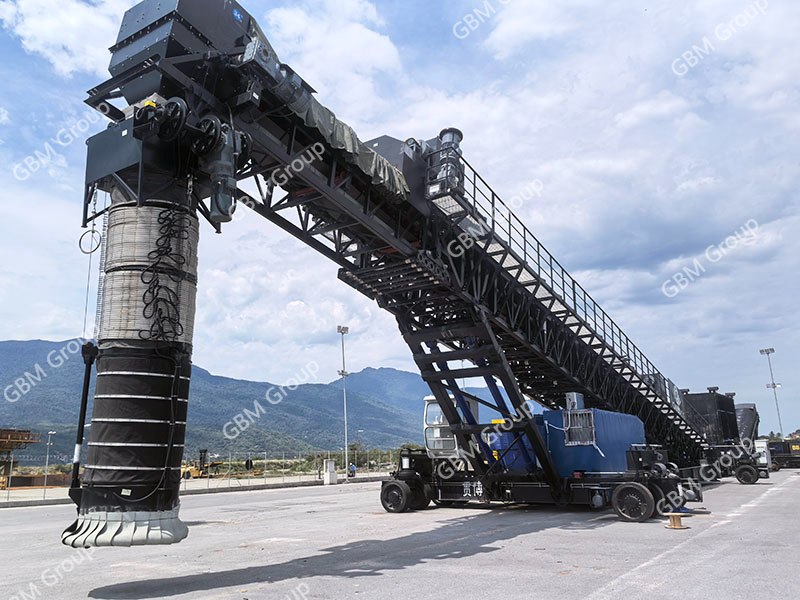
This project came to life through close collaboration. The client needed a system that could accept material from two feeding trucks simultaneously, move freely around the port, and load vessels cleanly and efficiently. Standard equipment would not do. So we built something that would: a fully mobile, dust-controlled ship loading system with an articulating boom, designed from the ground up around their specific workflow.
Power of True Customization
No two ports operate exactly alike, and this Brazilian installation is a perfect example of why “off-the-shelf” thinking falls short. The client’s operation relies on trucks bringing pet coke to the loading point—a method that requires flexibility in equipment positioning and material intake.
From Truck Hopper to Ship Hold, Seamlessly
Our engineering team designed a fully integrated system that pairs a heavy-duty apron feeder with the ship loader itself. The feeder is positioned to receive rapid dumps from both trucks, creating a buffer that smooths out the intermittent supply into a continuous, steady 1,000 tph flow to the loader. The real differentiator, however, is the telescopic and articulating boom. This isn’t a fixed-position loader; it is designed to swing and extend, giving the operator the ability to position material precisely within the vessel’s holds. This reach minimizes manual trimming of the cargo, saving time and reducing vessel shifting during loading. We didn’t just connect a feeder to a loader; we engineered a choreographed material handling system that mirrors the client’s actual operational rhythm.
Containing Dust at the Source
Handling pet coke in a port environment comes with a responsibility—to the workforce and the surrounding community. Dust suppression is not an optional extra; it is central to sustainable operations. For this project, we integrated dust control not as an afterthought, but as a core design principle.
Breathing Easier Along the Entire Route
We installed targeted dust collection units at the critical transfer points where dust generation is highest. By capturing airborne particles at the feeder discharge and again at the ship loader’s boom tip, the system ensures that fugitive emissions are dramatically reduced. This means operators can work in a cleaner environment, the port can maintain good relations with its neighbors, and the client can operate with confidence, knowing they are meeting stringent environmental standards. It is proof that high throughput and environmental stewardship can, in fact, go hand in hand.
Enhancing Turnaround with Integrated Mobility
A fixed piece of equipment is a permanent commitment. But what if your material sources shift, or your berth assignments change? This Brazilian client needed a system that could adapt to the dynamic nature of port operations. That is why we put this ship loader on wheels.
Diesel-Powered Independence
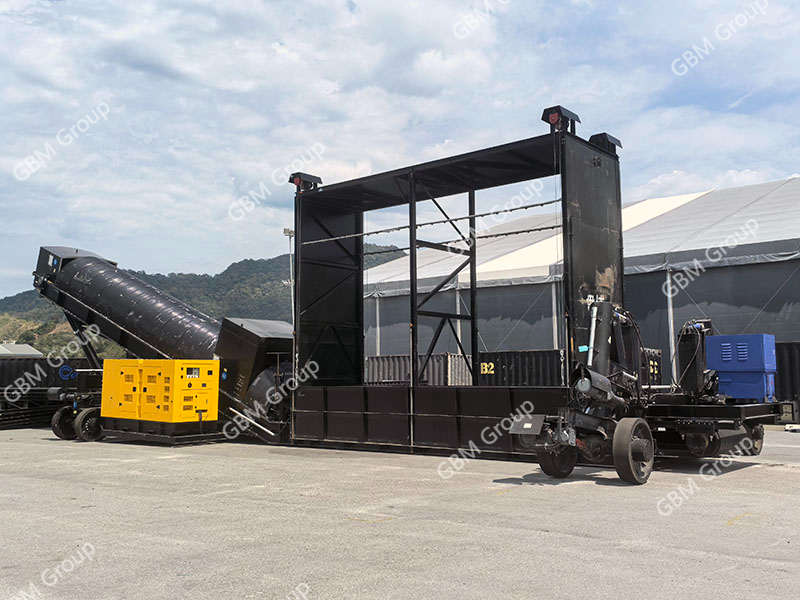
Both the ship loader and the apron feeder are mounted on heavy-duty tire-driven chassis, powered by integrated diesel generator sets. This design choice transforms the equipment from a fixed installation into a versatile, self-propelled asset. When a vessel completes loading, the units can be moved to a new location, repositioned for maintenance, or reconfigured to serve a different stockpile. For the client, this translates directly into increased operational efficiency: less downtime between ship calls, and the ability to pivot resources to where they are needed most. The mobility factor turns a capital investment into a flexible tool for port logistics.
What This Means for the Team on Site
For the operators and managers on the ground in Brazil, this new GBM system solves daily challenges they have lived with for years.
For the Operations Team: The integrated feeder and articulating boom mean fewer equipment handoffs and faster loading cycles, helping them meet vessel departure deadlines with confidence.
For the Maintenance Crew: The robust design, built for pet coke’s abrasiveness, means fewer unexpected breakdowns and more predictable maintenance schedules.
For the Environmental & Safety Officers: The integrated dust control systems provide measurable results, supporting compliance efforts and creating a safer, more breathable workspace.
This installation was designed with these individuals in mind—the people who make the port run every day.