

Rising Demand for Better Waste Handling
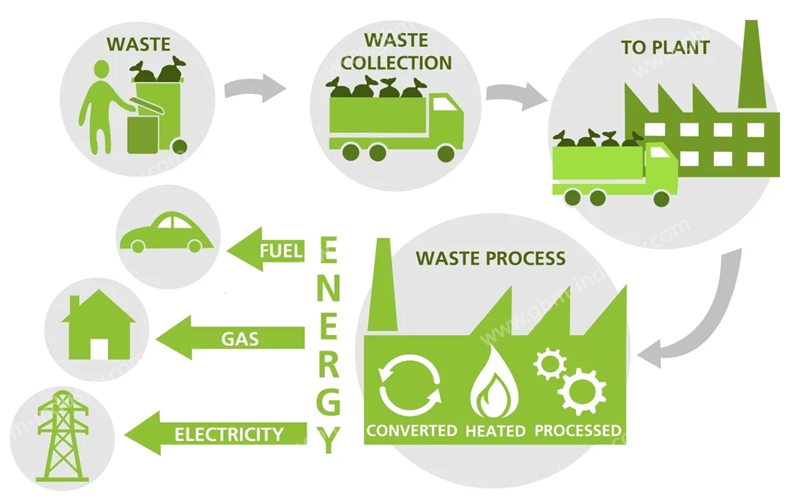
Across the world, the concept of green living is moving from a nice‑to‑have to a must‑have. Households separate their food waste. Cities mandate organic waste collection. Treatment plants turn leftovers into biogas or compost. But none of this works if the equipment at the receiving end cannot handle the material. Food waste is wet, sticky, variable in size, and often mixed with plastic or bones. A standard grab designed for coal or ore will jam, drip, or fail to close fully.
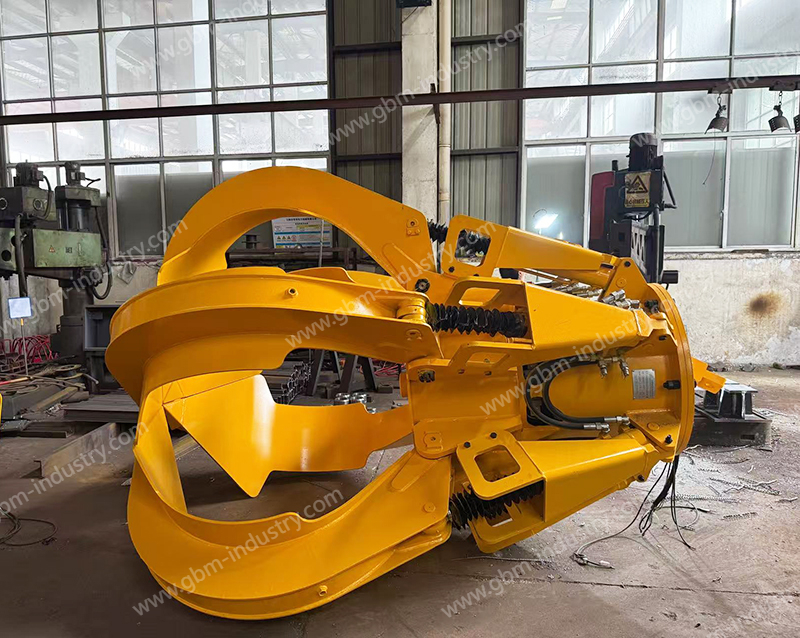
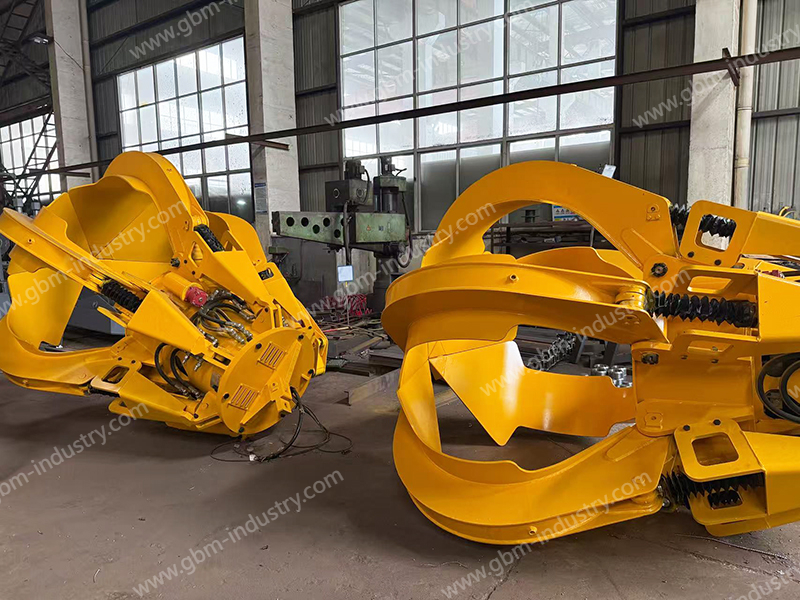
One of our customers runs a food waste treatment facility. They needed a reliable, efficient grab to feed digesters or compost lines. After reviewing options, they chose GBM. We have now completed the manufacturing of a 3‑cubic‑meter electro‑hydraulic orange peel grab designed specifically for food waste. The unit is ready for shipment. This is not a generic bucket. It is a tool built for the unique challenges of organic waste.
Grab Treat to Food Waste
Unlike coal or grain, food waste does not flow like a liquid. It comes in clumps, mixed with bags, strings, and occasional large lumps. It also holds moisture, which makes it heavy and sticky. A typical clamshell grab tends to push material aside rather than dig in. An orange peel grab (multi‑shell) is better, but only if the shells are shaped correctly and the closing force is well matched.
Why a multi‑shell design wins?
The GBM 3m³ grab uses a five‑shell (orange peel) configuration. The shells overlap slightly at the tips when closed, creating a clean seal that prevents dripping. The space between shells allows trapped water to drain during lifting. The geometry is optimised for food waste: the shells are deeper than a standard coal grab, so they hold more material without spilling. The closing force is set to cut through compacted waste but not so high that it crushes containers or creates excessive spray.
Made for the environment
Food waste facilities are wet, acidic, and often warm. We applied a heavy‑duty anti‑corrosion paint system, inside and out. The hydraulic cylinders are protected with chromed rods and high‑quality seals that resist the aggressive leachate. Every grease point is easily accessible for daily maintenance.
One Power Source, Easy Control
The grab is electro‑hydraulic, meaning it carries its own hydraulic power pack and is controlled from the crane cab via a pendant or radio. The customer chose this configuration because their overhead crane already has electrical supply available on the hoist.
How it works?
The grab connects to the crane’s hook or wire rope. A flexible cable carries three‑phase power down to the grab’s motor. Inside the compact power unit, an electric motor drives a hydraulic pump. The operator simply pushes “close” or “open” on a small control box. The grab responds immediately. There is no need for a separate hydraulic power source on the crane or a second person on the ground.
Benefits for food waste handling
Because the grab generates its own closing force hydraulically, it does not rely on the crane’s hoist motion to dig in. The operator can hover the grab over a pile, close it, and lift—all without timing the hoist. This makes for faster cycles and less fatigue. The grab also holds its closing force even when the pile is uneven, a common situation in food waste pits.
Quality Electrical Components
Food waste facilities are not kind to electronics. Humidity, corrosive vapours, and temperature changes attack every component. GBM chose components from trusted global brands to ensure the grab stays productive.
The motor and controls
The electric motor is from a leading European manufacturer, rated for high starting torque and sealed against dust and moisture. The contactors, relays, and the control transformer are all housed in an IP65 enclosure, keeping out water and corrosive gases. The cable entry uses a heavy‑duty strain relief and sealing gland.
The hydraulic valves and hoses
Inside the power pack, the directional valve is from a well‑known Italian brand, known for reliable shifting even with slightly contaminated oil. Hoses are rated for food waste applications, with a cover that resists oil and microbial attack. Where possible, we used stainless steel fittings on the cylinder ports.
Why this matters to the customer
A grab that breaks down every month creates mountains of unprocessed waste. By specifying quality electrical and hydraulic components, GBM gave the facility a grab that runs shift after shift, week after week. When maintenance is finally needed, standard parts are available locally. The customer does not have to chase obscure components from overseas.
 What is GBM Strength?
 What is GBM Strength?
The completion of this 3‑cubic‑meter food waste grab is another example of GBM applying engineering to a messy problem. We did not simply take a standard coal grab and repaint it green. We designed shells for sticky, wet material. We selected corrosion protection for an aggressive environment. We chose proven electrical components for long life.
Our design team has experience across dozens of bulk materials, from grain to garbage. Our manufacturing facility is equipped to produce small or large batches, with full testing before shipment. For this food waste grab, we tested the opening and closing cycles, measured the cycle time, checked for leaks, and verified the electrical safety.
Please contact GBM for your site solution!