

Introduction
If you work in construction, demolition, scrap recycling, port logistics, or waste management, you know how critical reliable material-handling attachments are for daily productivity. Among the most versatile, hardworking tools in heavy machinery fleets is the orange peel grab. Also known as a cactus grab or polyp grab, this multi-tine hydraulic attachment solves one of the biggest challenges in industrial handling: moving irregular, bulky, jagged, or loose materials efficiently and safely.
Unlike standard buckets designed for uniform dirt or gravel, the orange peel grab excels at grabbing fragmented scrap metal, tangled debris, uneven rock piles, wooden logs, industrial waste, and biomass materials. Its unique petal-like claw design opens wide, wraps around uneven loads, and locks firmly for lifting, sorting, loading, and unloading. In this complete guide, we break down exactly what an orange peel grab is, how it works, the different types available, core industrial applications, key benefits, maintenance best practices, and how to choose the right model for your project. Whether you’re upgrading your excavator, crane, or port handling equipment, this guide will help you maximize ROI and operational efficiency.
What Is an Orange Peel Grab?
An orange peel grab is a heavy-duty mechanical or electro-hydraulic grapple attachment fitted with multiple curved, high-strength steel tines (petals) that open and close to grip loose, irregular bulk materials. It earns its name from its visual resemblance to an orange peel splitting open when the jaws fully expand. Most industrial models feature four to six curved tines that create a secure, enclosed grip around uneven loads that traditional buckets cannot contain.
Manufactured with high-tensile, wear-resistant steel, orange peel grabs are built to withstand harsh job site conditions, including abrasive scrap metal, heavy rock, corrosive waste materials, and repetitive high-cycle lifting. Many premium models include 360-degree rotation functionality, allowing operators to position loads with precise control without repositioning the entire machine. This flexibility makes the orange peel grab indispensable across diverse industrial sectors.
Unlike rigid digging buckets or fixed jaw grapples, the orange peel grab’s segmented design conforms to odd-shaped loads, preventing slippage during lifting and transport. It is compatible with most standard excavators, truck cranes, port cranes, and stationary material-handling systems, making it a universal attachment for modern industrial fleets.
Main Types of Orange Peel Grabs (Key Differences Explained)
Not all orange peel grabs are built the same. Choosing the correct type directly impacts job efficiency, load capacity, and machine compatibility. Below are the three primary categories used in commercial and industrial operations today.
1. Hydraulic Orange Peel Grab
The hydraulic orange peel grab is the most popular and widely used variant for modern job sites. Powered by the carrier machine’s hydraulic system, it delivers fast, smooth, fully controlled opening, closing, and rotation. Operators can adjust grip pressure in real time, making it ideal for both delicate sorting tasks and heavy-duty lifting.
Hydraulic models excel in scrap yards, demolition sites, and waste processing facilities. They offer 360-degree continuous rotation on most units, enabling precise load placement and material sorting without machine movement. With high cycle speeds and consistent grip force, hydraulic orange peel grabs drastically reduce manual labor and cycle times for repetitive handling tasks.
2. Electro-Hydraulic Orange Peel Grab
Electro-hydraulic orange peel grabs integrate electric power with hydraulic actuation, making them perfect for fixed port cranes, ship unloaders, and stationary industrial handling systems. These units deliver consistent, powerful performance for high-volume bulk material processing, including coal, ore, biomass, and municipal solid waste.
Ideal for 24/7 continuous operation, electro-hydraulic grabs feature durable internal pumping systems and optimized rope guides to minimize wear. They are commonly found in shipping terminals, power plants, and large-scale recycling facilities where throughput volume is the top priority.
3. Mechanical (Rope-Operated) Orange Peel Grab
Mechanical orange peel grabs rely on cable and rope systems to open and close, requiring no hydraulic connection to the carrier machine. These are cost-effective, low-maintenance options for basic lifting and loading tasks in ports, quarries, and small scrap yards.
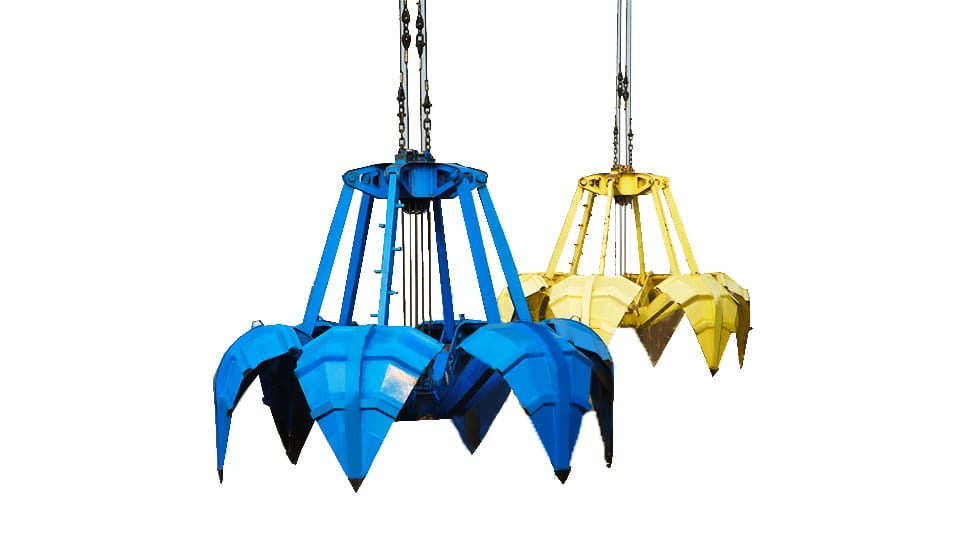
While more affordable, mechanical models lack the precision and rotation control of hydraulic units. They are best suited for straightforward bulk material handling rather than detailed sorting or precision placement jobs.
Top Industrial Applications of Orange Peel Grabs
The versatility of the orange peel grab makes it a staple across dozens of industries. Below are its most common and high-value use cases.
Scrap Metal Recycling & Metal Processing
Scrap yards depend heavily on orange peel grabs for scrap metal to handle twisted steel, iron fragments, car frames, machinery parts, and mixed metal scrap. Traditional buckets cannot securely grip tangled scrap, leading to frequent load slippage, safety hazards, and wasted time. The multi-tine peel design wraps around irregular scrap pieces, creating a tight, stable grip for loading, stacking, and sorting recyclable materials. This drastically improves yard throughput and reduces material loss during handling.
Construction & Demolition Sites
Demolition and construction projects generate massive volumes of mixed debris: broken concrete, rebar, wooden beams, rubble, and mixed construction waste. Rotating excavator orange peel grapples allow operators to clear demolition debris quickly, sort recyclable materials on-site, and load trucks efficiently. The 360-degree rotation feature ensures precise debris placement, reducing site cleanup time and improving job site safety by minimizing manual handling of heavy, sharp materials.
Port, Dock & Logistics Handling
Ports and shipping terminals use industrial orange peel grabs to unload bulk cargo including coal, ore, aggregates, and loose shipping waste. Their large capacity and strong grip make them ideal for high-volume vessel loading and unloading operations. Many port-specific models feature deep-tine designs and wide opening ranges to handle large, uneven bulk piles in dockside environments.
Waste Management & Municipal Solid Waste Processing
Waste-to-energy plants, landfills, and recycling facilities use orange peel grabs to sort, move, and compact municipal solid waste, industrial refuse, and organic biomass. The flexible grip handles mixed waste materials without damaging internal machinery, improving sorting accuracy and operational speed compared to manual or traditional bucket handling.
Agriculture & Biomass Handling
Farm and biomass operations use orange peel grabs to move logs, branches, crop waste, wood chips, and organic bulk materials. The gentle yet firm grip prevents damage to timber while securely lifting loose biomass piles for transport and processing.
Key Benefits of Using an Orange Peel Grab
Investing in a high-quality orange peel grab delivers measurable operational, safety, and financial benefits for industrial businesses.
1. Unmatched Versatility for Irregular Loads
Standard machine attachments are limited to uniform, flat, or granular materials. Orange peel grabs handle virtually any irregular bulk material—scrap metal, rock, wood, debris, waste, and ore—eliminating the need for multiple specialized attachments. This reduces equipment costs and machine swap-out downtime.
2. Improved Job Site Safety
By eliminating manual lifting and sorting of heavy, sharp, or bulky materials, orange peel grabs drastically reduce workplace injury risks. The secure enclosed grip prevents load drops and slippage, while remote hydraulic operation keeps operators at a safe distance from moving debris and scrap.
3. Higher Productivity & Faster Cycle Times
Hydraulic and rotating orange peel grabs speed up loading, sorting, and stacking cycles significantly. Operators can complete more loads per hour with greater precision, increasing overall job site throughput and project turnaround speed.
4. Durability & Long Service Life
Premium orange peel grabs are constructed from high-grade hardened steel with wear-resistant plating and reinforced tines. Designed for repetitive heavy-duty use, they resist bending, abrasion, and corrosion, delivering long-term reliability even in harsh industrial environments. Many models require minimal routine maintenance compared to complex mechanical attachments.
5. Cost Efficiency & Better ROI
Faster cycle times, reduced labor reliance, fewer workplace accidents, and minimized equipment downtime all combine to lower operational costs. The multi-purpose functionality of one orange peel grab replaces multiple single-use attachments, cutting fleet investment costs and storage requirements.
How to Choose the Right Orange Peel Grab for Your Machine
Selecting the perfect orange peel grab requires matching specifications to your machine size, material type, and daily workload. Use these expert criteria to avoid mismatched equipment and performance gaps.
1. Match Grab Capacity to Carrier Weight
Orange peel grabs are sized for specific excavator, crane, or machine weight classes. Small 5–10 ton excavators require compact grab models, while 20+ ton machines support large-volume heavy-duty grabs. Oversized grabs cause machine instability and safety risks, while undersized units limit productivity.
2. Choose Hydraulic vs. Mechanical Based on Tasks
For precision sorting, demolition work, scrap processing, and frequent load positioning, select a hydraulic rotating orange peel grab. For basic bulk loading in ports or quarries with minimal precision needs, a cost-effective mechanical model suffices.
3. Check Tine Quality & Build Material
Always prioritize grabs made from high-tensile wear-resistant steel. Reinforced tine edges, thick side plating, and corrosion-resistant finishes extend service life in abrasive scrap and waste environments.
4. Verify Rotation Functionality
360-degree continuous rotation is a game-changer for demolition, scrap sorting, and tight job sites. If your workflow requires frequent load repositioning without moving the carrier machine, ensure your model includes full rotation capability.
5. Confirm Compatibility & Mounting Fit
Check hydraulic flow requirements, mounting bracket dimensions, and pin sizes to ensure full compatibility with your excavator or crane. Mismatched hydraulic specs lead to slow operation or equipment damage.
Orange Peel Grab Maintenance Tips for Long-Term Performance
Proper maintenance ensures your orange peel grab maintains peak performance and maximum lifespan. Follow these simple guidelines:
- Regular Lubrication: Grease all pivot points and rotating joints daily during heavy use to prevent friction wear and stiff movement.
- Inspect Tines & Welds: Check for bent tines, cracked welds, or wear thinning after heavy scrap or rock handling. Repair minor damage immediately to avoid catastrophic failure.
- Monitor Hydraulic Systems: For hydraulic models, check hoses, seals, and fluid levels regularly to prevent leaks and pressure loss.
- Clean After Use: Remove accumulated debris, rust, and corrosive waste residue to prevent long-term material degradation.
- Schedule Seasonal Servicing: Complete full mechanical inspections, part replacements, and system flushes quarterly for high-volume industrial use.
Frequently Asked Questions (FAQs)
What materials can an orange peel grab handle?
Orange peel grabs handle scrap metal, demolition debris, rock, boulders, logs, biomass, municipal waste, coal, ore, and most irregular bulk materials that standard buckets cannot grip securely.
Is an orange peel grab the same as a grapple?
Yes—orange peel grab and orange peel grapple are interchangeable terms. It is a specialized multi-tine grapple designed specifically for irregular bulk material handling.
Do I need a rotating orange peel grab?
Rotating models are highly recommended for demolition, scrap recycling, and tight job sites. They drastically improve precision and efficiency compared to fixed non-rotating units.
Conclusion
The orange peel grab is one of the most versatile, cost-effective, and high-performance attachments for modern industrial material handling. Its unique petal-style clamping design solves the longstanding challenge of moving irregular, bulky, and jagged materials across construction, demolition, scrap recycling, port logistics, and waste management industries. By choosing the right type—hydraulic, electro-hydraulic, or mechanical—and following proper maintenance practices, businesses can drastically boost productivity, improve job site safety, and lower long-term operational costs.
Whether you’re upgrading a single machine or outfitting an entire fleet, investing in a quality orange peel grab delivers consistent ROI through faster cycle times, reduced labor dependency, and extended equipment service life. For anyone working with mixed bulk or scrap materials, this attachment is not just an upgrade—it’s an essential tool for streamlined industrial operations.