

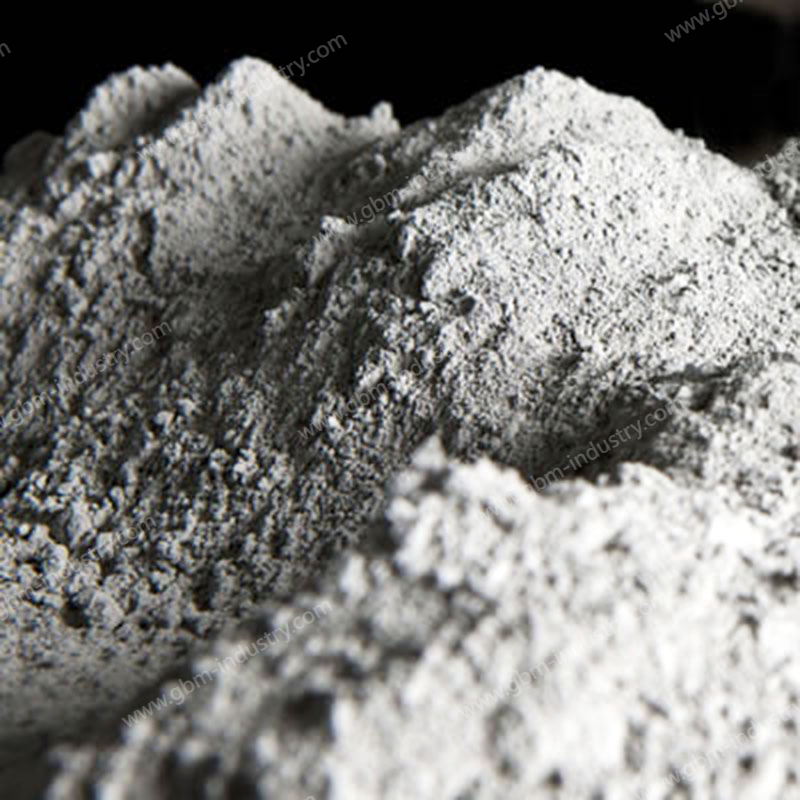
The relationship between global cement trade and the shipping industry is quite complex: it involves both regular scheduled shipments and sporadic short-term shipments. Cement trade volumes increase significantly when companies within the same multinational cement group transport goods among themselves. However, independent cement traders continue to exert a major influence on price levels and trade patterns.
Recent years demonstrate that fluctuations in construction activity in countries like China and Spain can profoundly alter regional cement trade patterns. Similarly, nations competing to build new production capacity to meet future demand can substantially increase exports of cement and clinker. The economic viability of maritime transport depends on plant locations and inland logistics conditions.
The volatility of freight rates further complicates maritime transport. While bulk freight rates are independent of the cement industry itself, they profoundly affect the cost competitiveness of shipping goods from one country to global markets. Thus, regarding the trade patterns and volumes of seaborne cement, fluctuating shipping prices—evident over the past five years—add uncertainty to future prospects.
However, when volumes are substantial, maritime transport proves more economical and environmentally friendly than land transport. Shipping 3,500 tons of cement requires just one vessel, whereas land transport necessitates 350 trucks—a significant waste of time and money. Maritime transport can utilize either specialized cement carriers or conventional dry bulk carriers.
Demand – Past, Present, and Future
Overall, the seaborne cement trade will not significantly impact the global shipping market in the coming years—unless natural disasters like hurricanes or earthquakes become frequent, causing a sudden surge in cement demand. Cement transport constitutes a relatively small portion of the entire shipping industry. Even during the peak period from 2006 to 2008, seaborne cement shipments reached only about 106 million tons. This represented just over 2% of the total seaborne dry bulk trade at that time and is not expected to increase further. At best, seaborne cement shipments will remain around 100 million tons annually, constituting a stable segment within the minor bulk cargo category.
Demand for maritime cement trade is heavily influenced by macroeconomic conditions: demand rises during construction booms across various facilities and falls during economic and financial crises. Fundamentally, the cement industry is a relatively stable global sector, where fluctuations in demand merely reflect subtle variations in production and consumption.
In 2008, global cement shipping trade spanned the globe, with activity across the Atlantic, Pacific, and Indian Ocean regions. By 2009, maritime trade concentrated primarily in the Indian Ocean and Asia-Pacific. Countries like China, Japan, and Pakistan exported cement to sub-Saharan Africa and Australia to meet local demand. BNP Paribas observed that transoceanic trade has gradually been replaced by regional trade clusters.
Overall Cement Demand
Except for Asia (particularly China and India), the Middle East, and North Africa, which experienced robust growth, cement demand plummeted in nearly all other markets. Simultaneously, developed economies with mature markets—such as the United States, Western Europe, and Japan—faced economic downturns, resulting in demand plummeting by over 30%. Spain experienced the steepest decline (33%), having previously been a major cement consumer. Additionally, rising management costs have driven up prices for both bulk carriers and container ships.
Supply
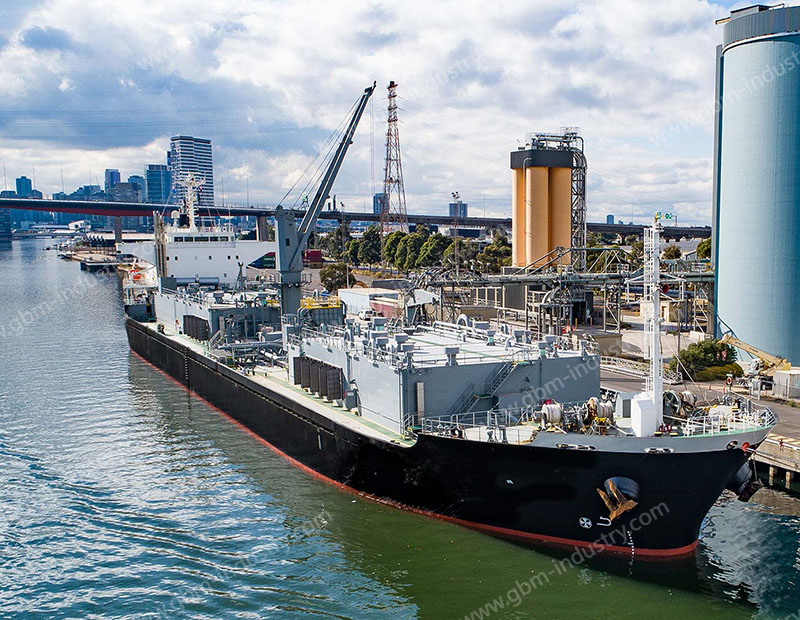
Vessels used for cement transport are primarily divided into two types: general dry bulk carriers and specialized cement carriers. As a dry bulk commodity, cement is typically transported using approximately 40,000-deadweight-ton (Lightweight) vessels, with specific tonnage determined by storage facilities at loading and unloading ports. In terms of scale, the light carrier fleet is the smallest among all seaborne dry bulk fleets, yet it also comprises the oldest vessels still in operation.
According to Clarkson Shipping Brokers, the light carrier fleet (10,000 to 40,000 deadweight tons) consists of 2,920 vessels with an average age of 19 years and a total tonnage of 78.6 million tons. Compared to other dry bulk fleets, the handy-size fleet has the fewest newbuild orders, yet 886 vessels totaling 28.3 million dwt will be delivered between 2010 and 2011, accounting for 36% of the fleet in service.
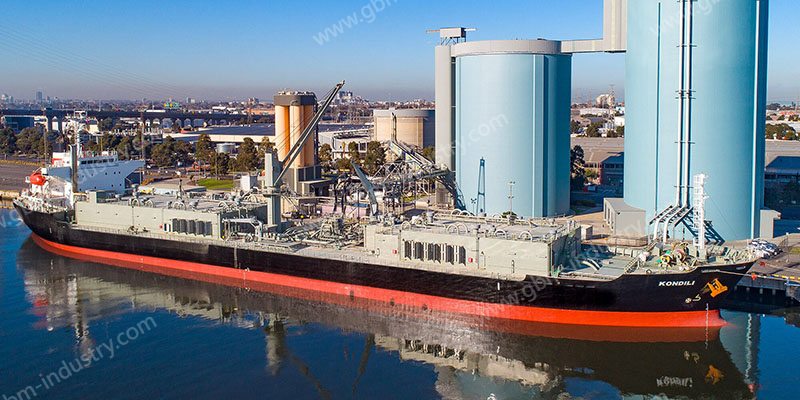
Although the handy-size fleet will not experience severe overcapacity, its scale will expand and may impact freight rates. Over the past five years, this segment’s capacity has remained around 75 million tons. However, it will increase to over 90 million tons in the coming years.
Specialized cement carriers present a different scenario. First, seaborne cement trade constitutes a niche market with relatively limited cargo volumes, a fact reflected in the fleet size. Approximately 80 large cement carriers with 10,000 deadweight tons of capacity are in operation. Additionally, around 350 cement carriers under 10,000 tons are dedicated to cement trade. The average age of cement carriers is 25 years. Order books for dedicated carriers over 10,000 dwt remain modest, totaling only 11 vessels.
As transoceanic trade gradually shifts toward regional trade clusters, dedicated carriers face relatively less disruption within the maritime cement trade, primarily due to their scheduled loading operations.
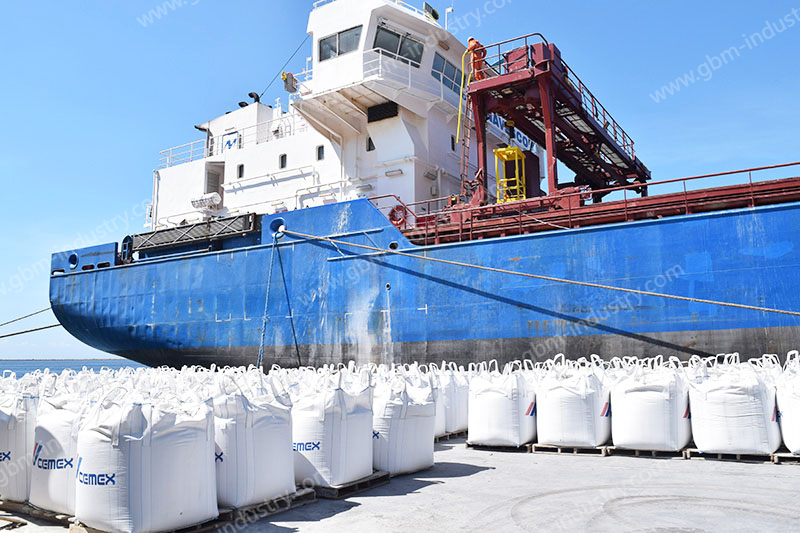
Operations of Dedicated Cement Carriers and General Bulk Carriers
Bulk cement carriers primarily employ two distinct automated unloading systems: mechanical and pneumatic.
Mechanical loading utilizes conveyors or screw conveyors to transport cement onboard. Shore-based ship loaders connect to central loading points on the vessel, with cement conveyed via pneumatic chutes or screw conveyors across the deck to various placement points before entering cargo holds. Mechanical loading employs vertical and horizontal screw conveyors to pull cement from the holds to the deck, where it enters a rotary conveyor to reach shore-based conveyors or cement trucks.
Pneumatic loading utilizes compressed air to transport cement through pipelines from shore to ship. Compressors installed either onshore or onboard generate the necessary air pressure. Pneumatic loading employs vertical and horizontal screw conveyors to pull cement from storage compartments onto the deck, where it enters pressure pumps. Compressed air then transports the cement through pipelines to shore collection points.
Some lighter vessels rely solely on port facilities for cargo handling; others can independently manage cargo without or despite inadequate port infrastructure.
GBM Delivers Professional Solutions for Cement Transport
Addressing the growing demands for efficiency and environmental compliance in marine cement transportation, GBM leverages its extensive experience in bulk cargo handling equipment manufacturing to provide comprehensive professional solutions for the maritime transport of cement and clinker. Whether utilizing standard dry bulk carriers or specialized cement carriers, GBM’s equipment enables efficient, low-loss, and low-dust loading/unloading operations, helping customers optimize logistics costs and enhance transportation competitiveness.
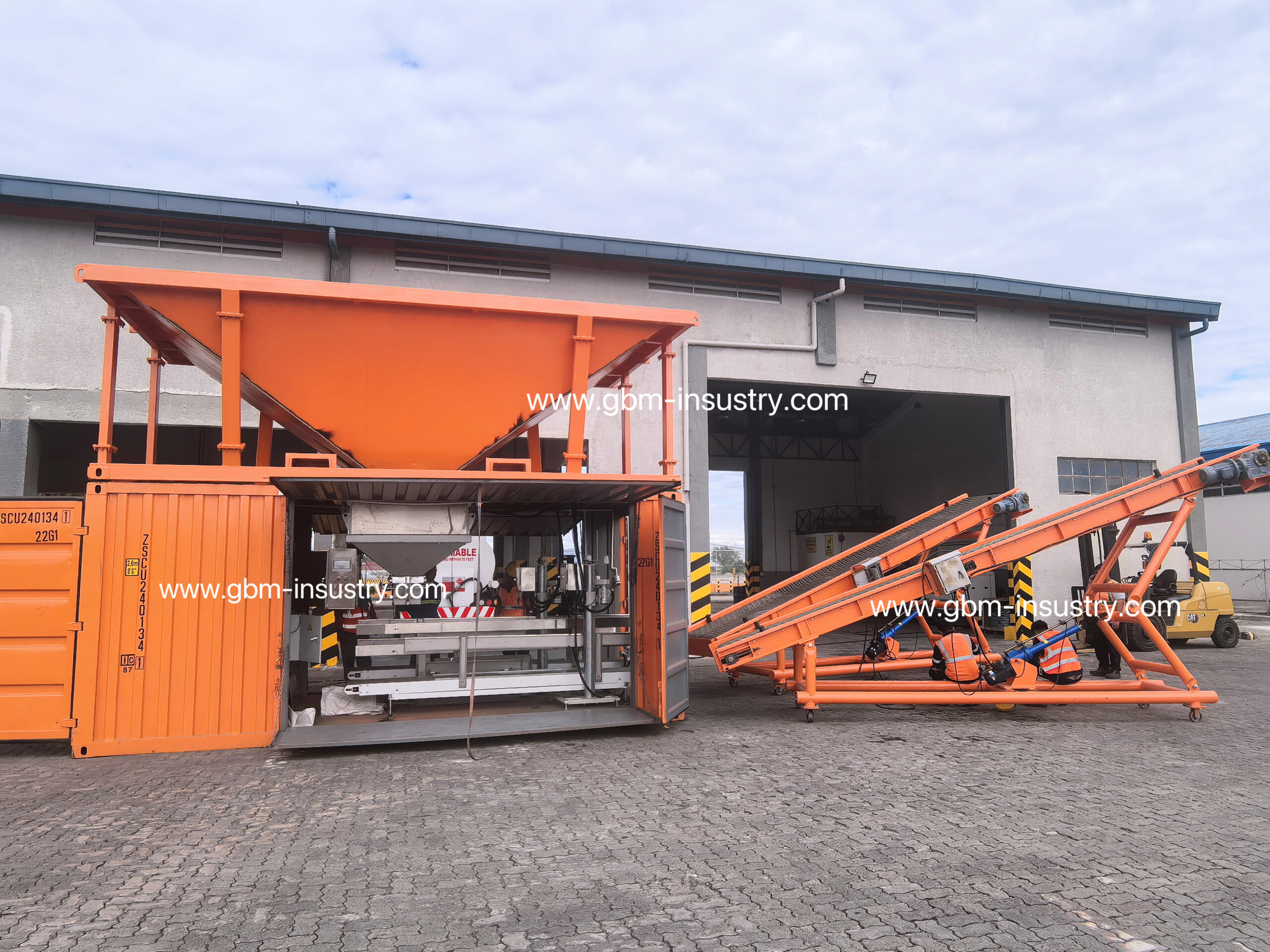
For unloading operations, GBM’s screw unloader is the ideal solution for cement discharge. Featuring a fully enclosed screw conveying structure, it directly accesses cargo holds to retrieve material. Through vertical and horizontal screw conveyors, cement is continuously transported ashore with zero dust leakage, completely eliminating the dust issues associated with traditional grab unloading methods. The screw unloader accommodates vessels of varying tonnages, particularly excelling in upgrading self-unloading systems for dedicated cement carriers. Its high-efficiency conveying capability significantly reduces vessel layover time in port. Complementing the “mechanical system” and “pneumatic system” mentioned in the article, it offers ports more flexible unloading options.
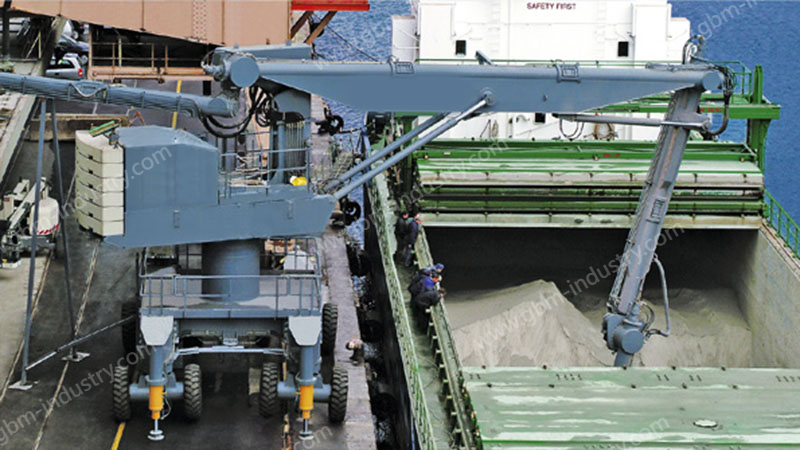
For applications utilizing grab unloading, GBM has specifically designed leak-proof grabs. Addressing the high flowability and leakage susceptibility of powdery and granular cargoes like cement and clinker, these grabs feature high-strength wear-resistant liners and optimized bucket mouth sealing structures. This effectively prevents material spillage during grabbing and lifting, reducing cargo loss and marine pollution. Simultaneously, the grab’s structural design ensures seamless compatibility with the bridge grab unloader, guaranteeing high gripping force and tight closure. This increases the single-lift capacity, thereby accelerating unloading efficiency.
For material transfer and conveying, GBM provides integrated dust-suppression hoppers and belt conveyor systems. The dust-suppression hopper incorporates a high-efficiency pulse-jet baghouse filter that captures dust instantly as cement enters the hopper, ensuring clean air at the work site and compliance with increasingly stringent port environmental standards. A feeder at the hopper outlet uniformly feeds cement into the downstream belt conveyor system. GBM’s belt conveyors feature dust-proof enclosures and spill-proof skirt boards to eliminate dust leakage during transport. Capable of long-distance, high-volume conveyance, they deliver cement smoothly to stockyards or downstream production facilities.
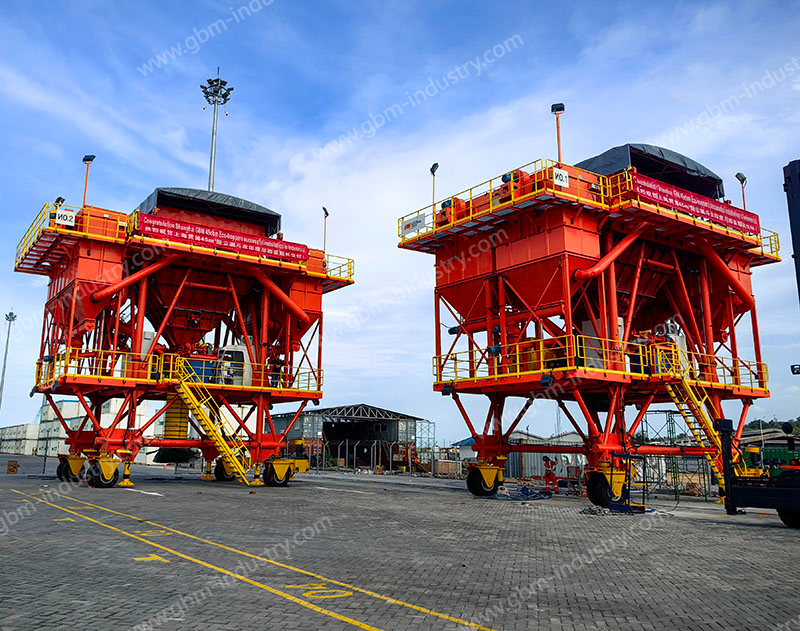
Furthermore, GBM provides comprehensive services spanning equipment selection, installation, commissioning, and operational maintenance. Tailoring solutions to regional trade patterns in maritime cement transport, we deliver customized loading/unloading plans for diverse ports. Whether handling seasonal peaks for bulk carriers or scheduled shipments for dedicated cement carriers, GBM’s specialized equipment significantly enhances loading/unloading efficiency and reduces operational costs, empowering clients to gain a competitive edge in global cement trade. Choosing GBM means equipping your maritime cement operations with reliable, efficient, and environmentally responsible equipment solutions.