

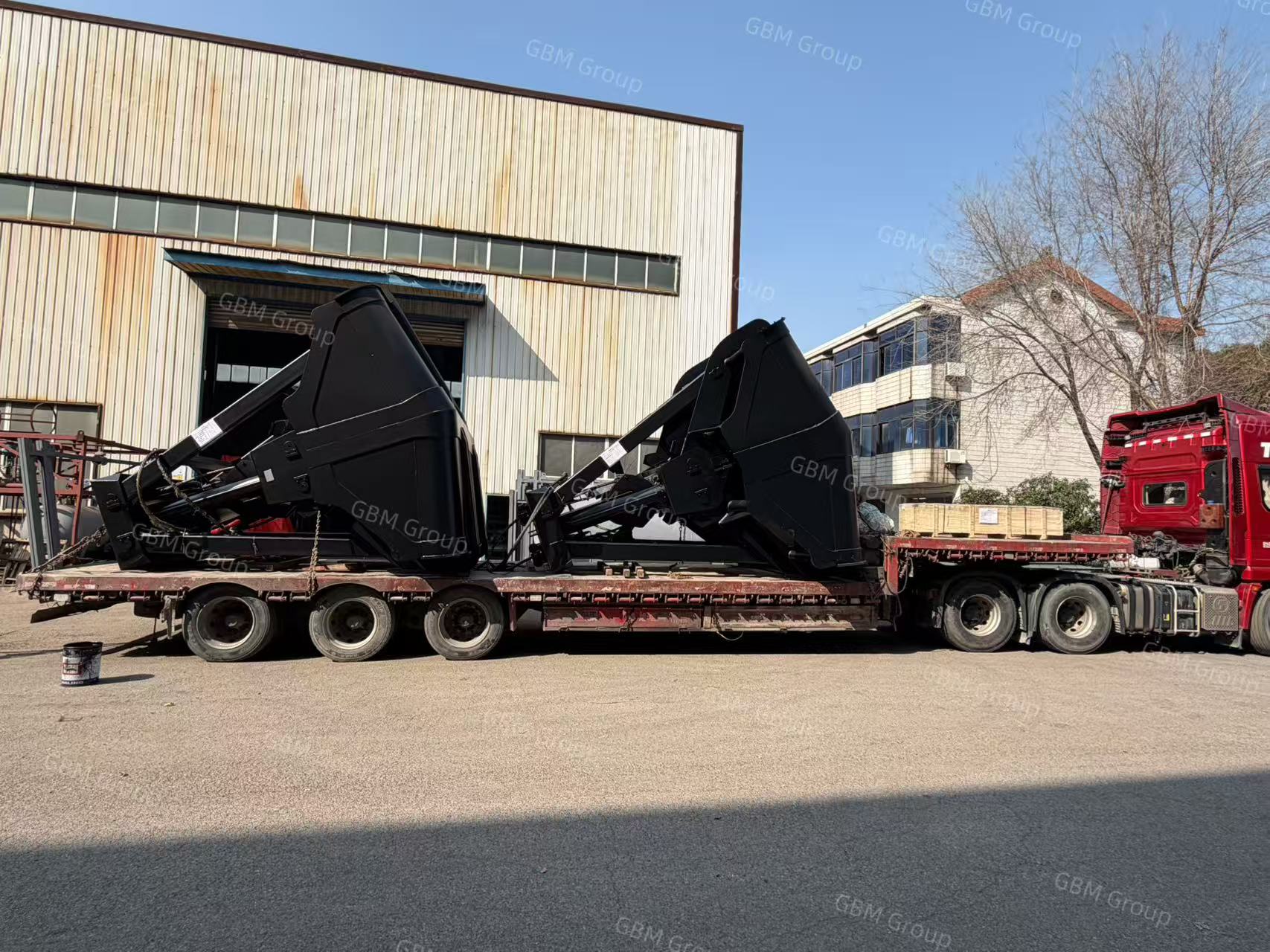
GBM is pleased to announce the successful completion and shipment of 4 units custom-engineered nickel ore grab, now en route to our customer via bulk carrier. This delivery represents more than just another piece of equipment—it underscores GBM’s commitment to providing tailored solutions for the most demanding material handling applications.
Nickel ore is notoriously difficult to handle. Its high moisture content, sticky nature, and tendency to compact during transport create challenges that standard grabs simply cannot overcome. The grab we have just shipped was designed from the ground up to address these specific characteristics, ensuring that our customer can unload vessels efficiently, safely, and without the delays caused by material sticking or equipment jams.
This project draws on GBM’s extensive experience with nickel ore across multiple sites. We have learned what works and what doesn’t through years of direct feedback from operators working with this challenging material. The result is a grab that is not only robust but also finely tuned to the realities of nickel ore handling.
Why Nickel Ore Need Different Approach?
Understanding the Material
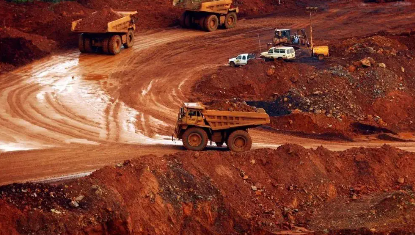
Nickel ore is unlike most bulk cargoes. When loaded onto vessels in countries like Indonesia or the Philippines, it often contains significant moisture. This moisture can cause the material to behave like a liquid during transport—a phenomenon known as liquefaction—but during unloading, it presents a different set of problems.
Once compacted in a ship’s hold, nickel ore becomes dense and sticky. Standard grabs, designed for free-flowing materials like coal or grain, struggle to penetrate the compacted surface. They may skate across the top without digging in, or they may fill incompletely, reducing productivity. The material also tends to adhere to grab surfaces, building up over time and eventually interfering with closing mechanisms.
The Limitations of Standard Equipment
Many customers have learned the hard way that off-the-shelf grabs are not suitable for nickel ore. The wear rates are higher, the cycle times longer, and the maintenance requirements more frequent. In some cases, operators have had to supplement mechanical unloading with manual labor—a costly and slow solution.
The grab we have just shipped avoids these problems because it was designed with nickel ore’s properties as the starting point, not an afterthought. Every aspect of its geometry, material selection, and hydraulic system was chosen to match the material it will handle.
Custom Design on Nickel Ore Experience
Design Built on Real Feedback
GBM has been involved in nickel ore handling for many years. We have supplied grabs to terminals in China, Southeast Asia, and beyond, and we have maintained close contact with the teams using them. This ongoing dialogue has given us insights that no textbook can provide.
For this latest project, our engineering team began by reviewing feedback from previous nickel ore installations. What worked well? Where did operators see room for improvement? How could we make the next grab even more effective? The answers to these questions shaped the design from the initial concept.
Tailored for the Customer’s Specific Operation
No two nickel ore operations are exactly alike. The moisture content can vary from shipment to shipment. The particle size distribution differs between mines. The unloading equipment—whether ship unloaders or cranes—has its own characteristics that affect how a grab performs.
We worked closely with this customer to understand their specific situation. We asked about their typical vessel sizes, their unloading rates, their existing equipment, and their pain points. The grab we produced reflects this collaborative approach. It is not a generic product adapted to nickel ore; it is a nickel ore grab adapted to this customer’s operation.
Complexity Behind the Finished grab
Advanced Fabrication Techniques
Producing a grab for nickel ore requires more than simply scaling up a standard design. The forces involved are different. The wear patterns are different. The demands on the hydraulic system are different. Our manufacturing process reflects these realities.
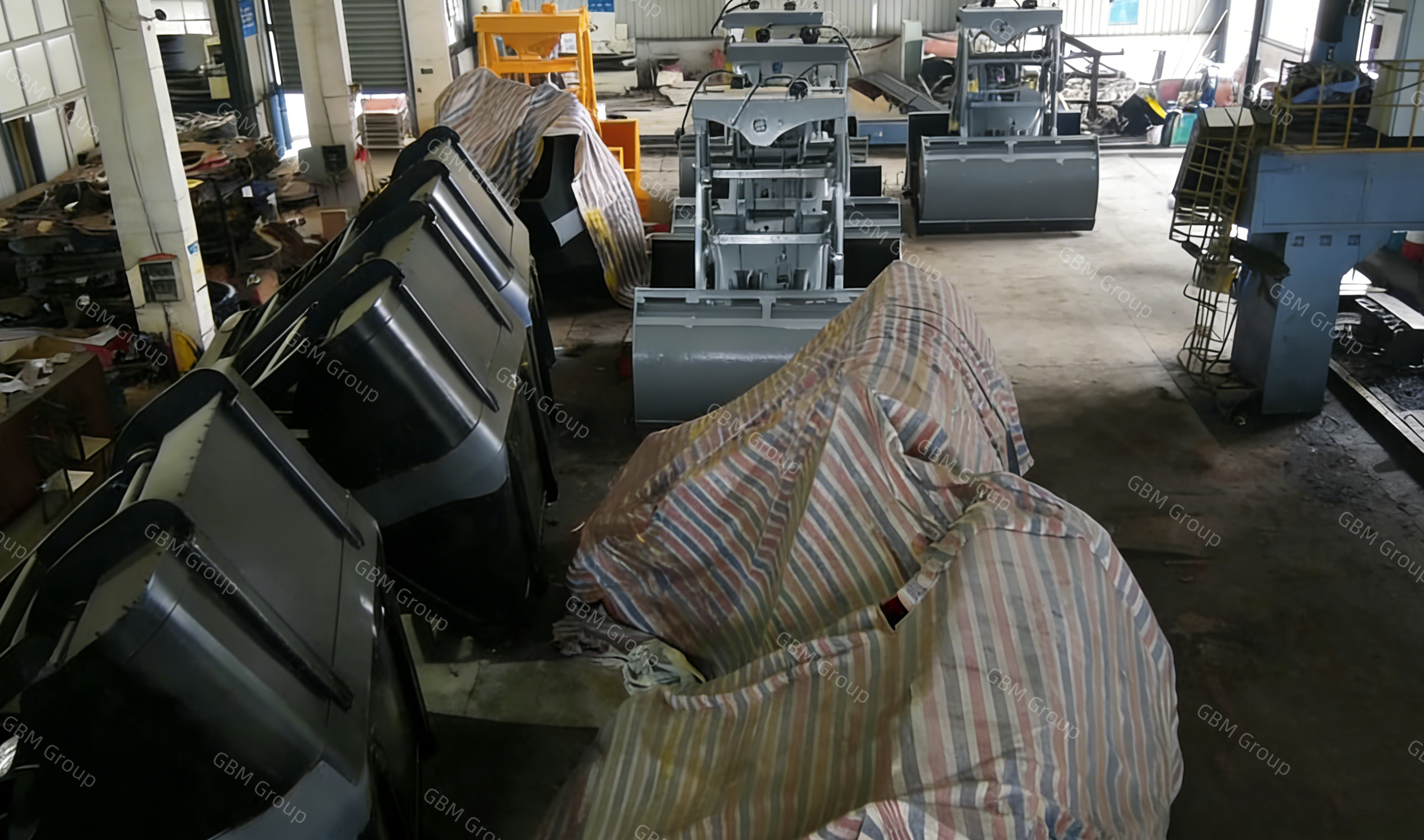
The grab structure is fabricated from high-strength steel selected for its ability to withstand the abrasion and impact of nickel ore. Weld procedures are carefully controlled to ensure consistent quality in critical areas. Cutting and forming operations are performed with precision to maintain the correct geometry—essential for achieving the digging action that nickel ore requires.
Rigorous Quality Control
Throughout the production process, our quality team monitored every stage. Dimensional checks ensured that components fit together as designed. Weld inspections verified that joints would hold up under load. Hydraulic system testing confirmed that pressures and flows were within specification.
Before the grab was approved for shipment, it underwent a full functional test. We cycled it through its full range of motion, checking for smooth operation and verifying that all systems responded correctly. Only when we were satisfied that it met GBM’s standards did we prepare it for transport.
Delivering Value Across the Miles
Safe Transport by Bulk Carrier
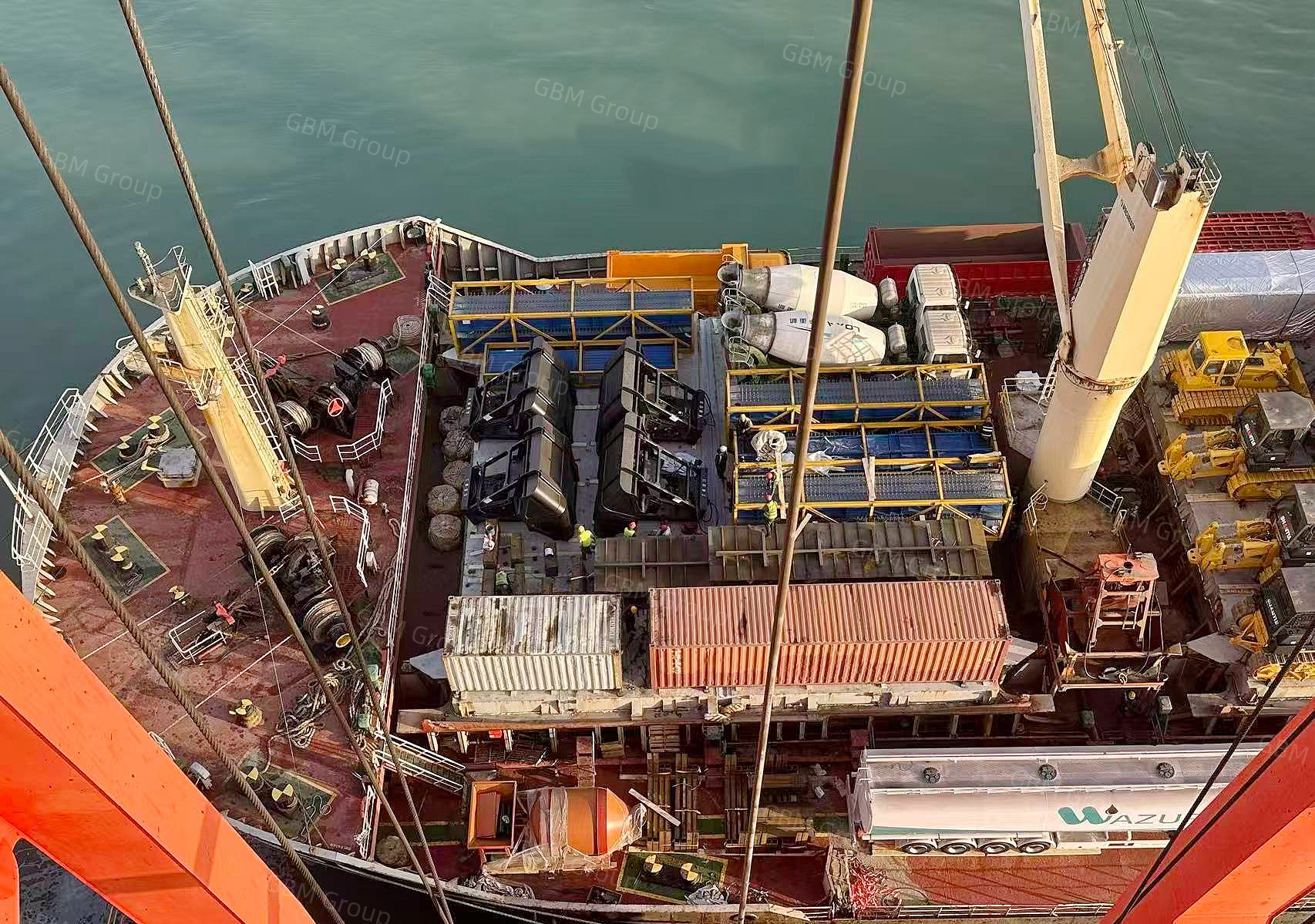
With production complete, the grab was carefully prepared for its journey. Given its size and weight, transport by bulk carrier was the most practical option. Our logistics team coordinated with shipping lines to ensure proper stowage and securement, protecting the equipment during the voyage.
The customer will receive the grab at their port, ready for installation on their unloading equipment. We have provided detailed documentation to guide the setup process, and our technical support team remains available to answer questions as they arise.
The Partnership Continues
For GBM, delivery is not the end of the relationship. We will follow up with the customer after the grab has been in operation, gathering feedback on its performance and learning how we can continue to support them. This commitment to long-term partnership is what sets GBM apart.
As the customer begins using this custom grab, they will experience the difference that purpose-built design makes. Unloading cycles will be faster. Maintenance intervals will be longer. The frustrations of material sticking and equipment jams will be reduced. That is the value of choosing a partner who understands nickel ore.
Proven Experience for Challenging Materials
The shipment of this nickel ore grab represents another step in GBM’s mission to provide specialized solutions for difficult handling applications. We do not believe in one-size-fits-all equipment. We believe in understanding the material, understanding the operation, and engineering a solution that fits both.
Nickel ore will continue to challenge operators around the world. Its properties do not change. But with the right equipment, those challenges can be managed. GBM brings years of experience, a commitment to quality, and a willingness to listen to the people who use our products every day.
For more information about GBM custom grabs for nickel ore and other challenging materials, please contact our sales team or visit our website.