

GBM is pleased to announce the successful completion of a custom-engineered ship loader designed and manufactured in close collaboration with our Brazilian partner for a leading local sugar producer. This project represents a significant achievement in specialized material handling, demonstrating what is possible when engineering expertise meets real-world operational constraints.
Sugar is one of Brazil’s most important exports, and the efficiency of port handling equipment directly impacts the country’s ability to move product to international markets. The customer, a well-established name in the Brazilian sugar industry, came to us with a challenge that off-the-shelf equipment could not solve. Their dock space was extremely limited, yet they needed to load vessels efficiently and reliably.
Working alongside our Brazilian partners, GBM’s engineering team developed a solution that pushes the boundaries of what a ship loader can do. The result is a machine that fits where others cannot, extends farther than its compact footprint would suggest, and delivers the throughput that modern sugar logistics demand.
The Challenge Of Limited Space
Ruled Out Solution
The customer’s dock was never designed for today’s vessel sizes or handling volumes. Like many older facilities, it was built when ships were smaller and space was less critical. Over the years, as vessels grew and throughput targets increased, the dock’s limitations became impossible to ignore.
Standard ship loaders, with their fixed geometries and large footprints, simply could not be installed. The space available for equipment placement was too narrow, and the reach required to access vessel hatches was too long. Any solution would have to be both compact when stowed and exceptionally long when deployed.
The Throughput Requirement
Adding to the complexity, the customer needed to maintain handling rates that would keep vessels moving. Slow loading means longer port stays, higher demurrage costs, and reduced fleet productivity. The target was clear: 1,000 tonnes per hour, sustained over each loading operation.
Meeting this throughput from a constrained dock position required innovative thinking. The machine would need to combine compact storage with extended reach, all while maintaining the structural rigidity and material flow characteristics needed for high-capacity handling.
Four-Section Telescopic Boom Ship Loader
Design for Max Reach, Mini Footprint
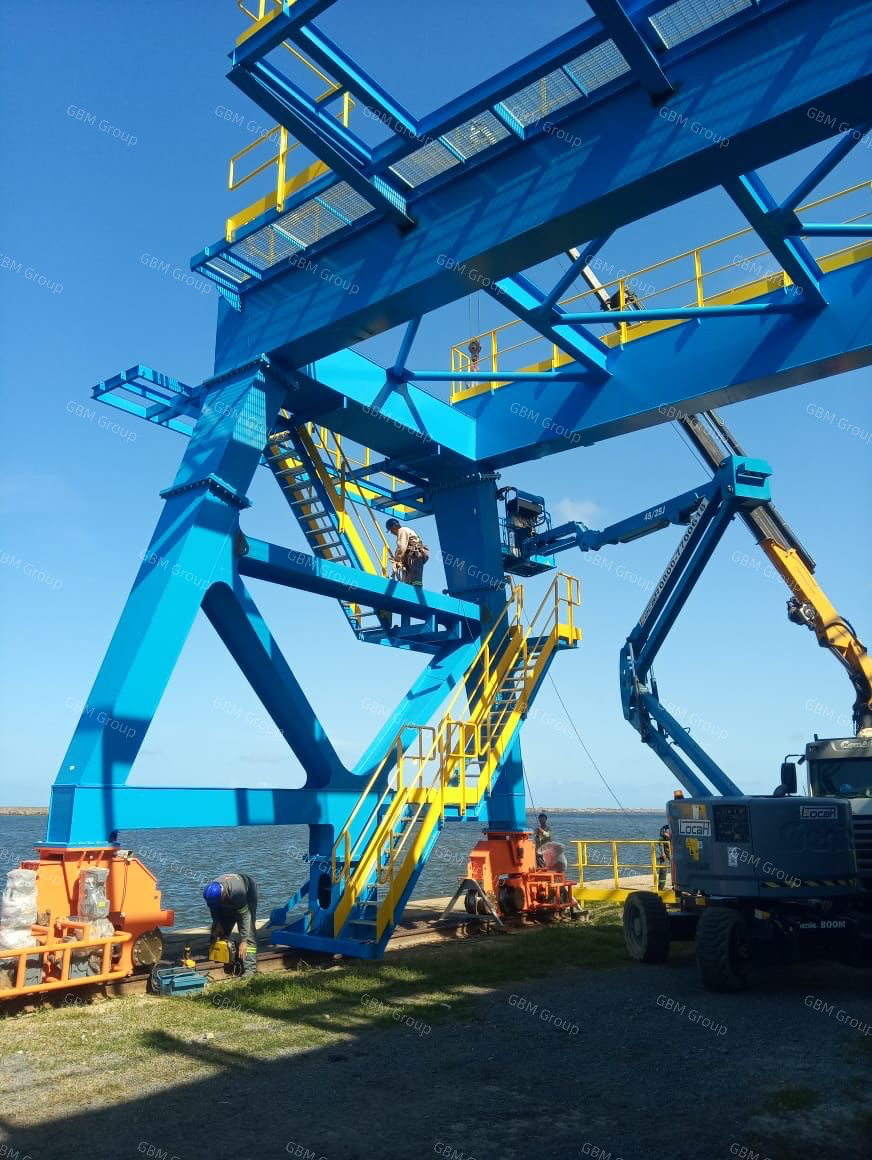
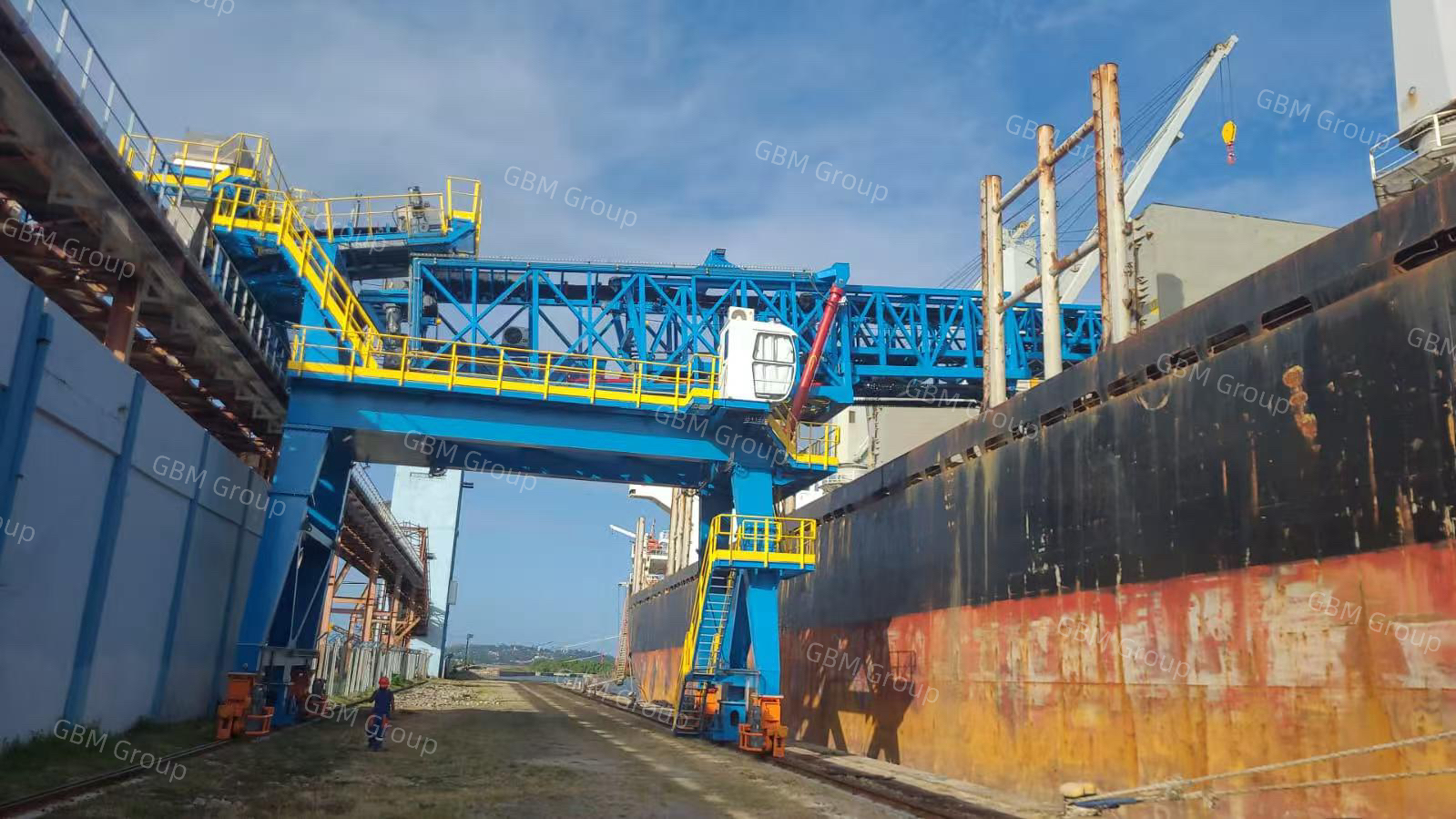
The centerpiece of this ship loader is its four-section telescopic boom. When fully extended, the boom reaches nearly 40 meters—enough to access vessel hatches even from a dock set back from the berth. When retracted, the boom measures approximately 15 meters, allowing the machine to be parked in the limited space available when not in use.
This telescopic action is not simply a matter of making one tube slide inside another. Each section must carry its share of the load, extend and retract smoothly under all conditions, and maintain precise alignment to keep the conveyor belt tracking correctly. The hydraulic system that powers the extension was carefully sized and synchronized to ensure consistent performance throughout the boom’s range.
Built for Sugar Handling
Sugar presents its own challenges for handling equipment. It is hygroscopic, meaning it absorbs moisture from the air, which can lead to caking if equipment is not designed properly. It is also abrasive, wearing on chutes and conveyors over time. And it must be handled gently enough to avoid degradation that affects product quality.
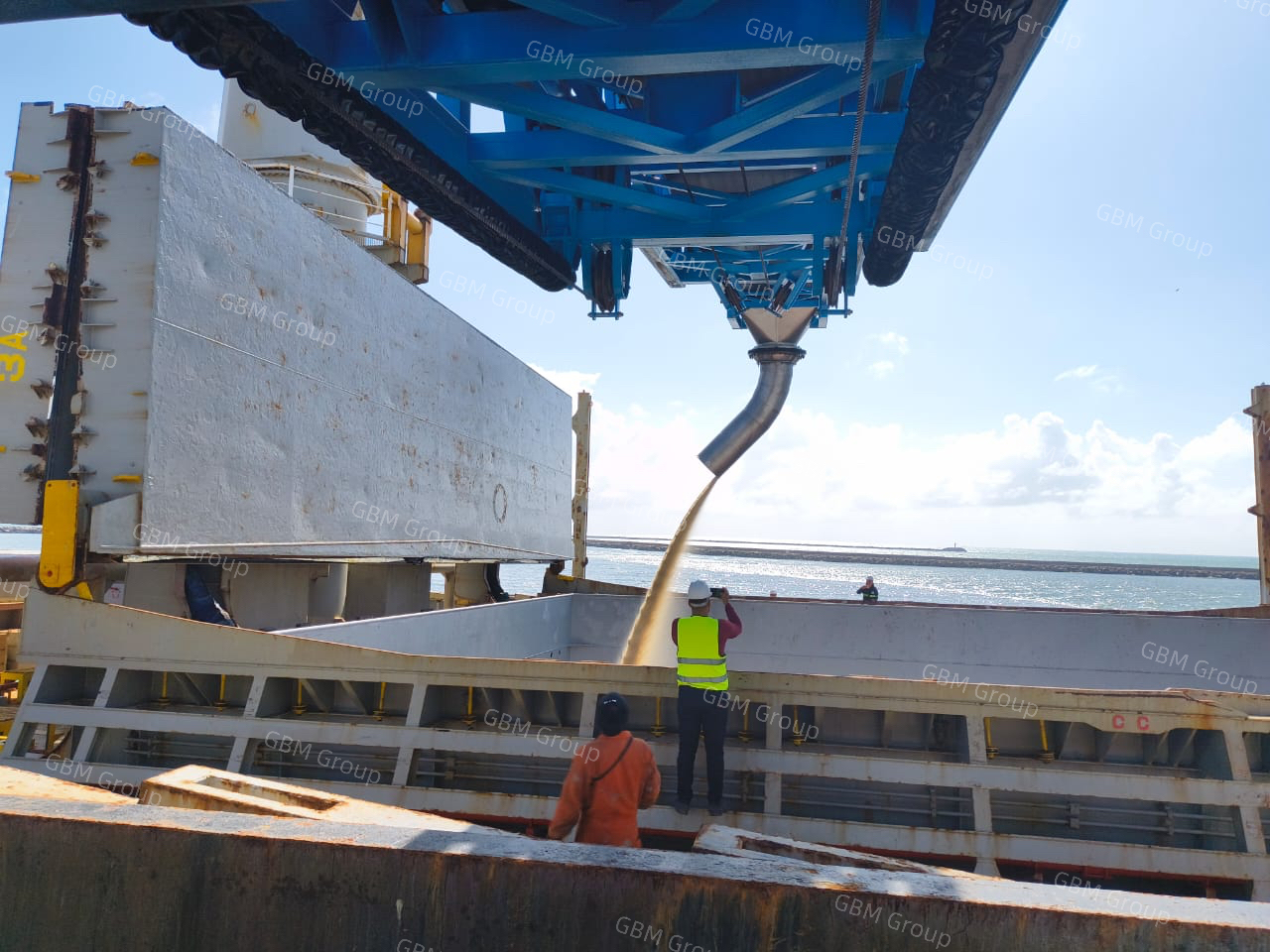
The GBM ship loader addresses these requirements through careful material selection and flow path design. Contact surfaces are configured to minimize buildup, and the conveyor system is designed to handle sugar at the rated 1,000 tonnes per hour without spillage or degradation.
Bringing the Design to Life
Work Hand-in-Hand with Brazilian Partner
This project was truly a collaborative effort. GBM brought its global experience in ship loader design and telescopic boom engineering. Our Brazilian partners contributed deep knowledge of local conditions, customer expectations, and the specific requirements of the sugar industry. Together, we created a machine that neither could have built alone.
Throughout the manufacturing process, teams from both companies worked closely to resolve challenges as they arose. Design reviews involved engineers from both sides, ensuring that every detail was examined from multiple perspectives. When questions came up about specific operating conditions, our partners’ local knowledge provided answers that made the design stronger.
Fabrication and Assembly
The ship loader was fabricated at facilities capable of handling the precision required for telescopic boom construction. Each boom section was manufactured to tight tolerances, ensuring that the sliding interfaces would operate smoothly over years of use. Weld procedures were qualified and inspected to meet the structural demands of a machine that would spend its working life lifting and extending under load.
Assembly proceeded methodically, with each system tested as it was installed. The hydraulic system was pressure-tested and cycled to verify operation. The conveyor was run in to check tracking and tension. Controls were programmed and tested through simulated operating sequences. Only when all systems performed to specification was the machine prepared for shipment.
Installation and Commissioning
Transport and Site Preparation
Getting a machine of this size to the customer’s site required careful planning. The boom sections, while telescopic, still needed to be transported safely. Our logistics team coordinated with local carriers to ensure that all components arrived on time and in perfect condition.
At the dock, the customer had prepared the foundation and support structure based on drawings provided during the design phase. This advance preparation allowed installation to proceed smoothly once the equipment arrived. Within days, the major components were in place and assembly was underway.
Making It Work in the Real World
Commissioning a ship loader involves more than just flipping a switch. Our technicians worked alongside the customer’s operations team to fine-tune every aspect of the machine’s performance. Boom extension and retraction were adjusted for smooth operation at all positions. Conveyor tracking was checked under load. Safety systems were tested to verify proper response.
The real test came when the first vessel was loaded. Watching the boom extend to reach the far hatch, retract to clear the dock, and cycle through multiple loading positions confirmed that the design worked as intended. The customer’s operators, who had lived with the space constraints for years, saw firsthand what thoughtful engineering could achieve.
Customer Satisfaction
Meeting the Numbers
The ship loader has now been in operation handling sugar at the rated capacity of 1,000 tonnes per hour. Vessels are loaded efficiently, with no delays caused by equipment limitations. The telescopic boom provides access to all hatches without repositioning the ship, saving time and simplifying operations.
For the customer, this means predictable loading times, reduced vessel turnaround, and the ability to plan shipments with confidence. The machine has become an integral part of their logistics chain, performing reliably shift after shift.
Feedback from the Team
The operators who run the machine daily have been generous with their feedback. They appreciate the smooth telescoping action, which gives them precise control over boom positioning. They value the visibility from the control station, designed with input from experienced operators. And they note the reliability—the machine starts when needed and runs through each loading cycle without unexpected stops.
One operator commented that the loader feels like it was built for this specific dock, because it was. That kind of feedback is what GBM strives for—not just meeting specifications, but creating equipment that feels right to the people who use it every day.
Engineering That Fits the Space and the Need
The successful completion of this ship loader project demonstrates GBM’s ability to solve complex material handling challenges through custom engineering and close collaboration. When standard equipment cannot fit the space, when operating conditions demand specialized solutions, GBM delivers.
We thank our Brazilian partners for their expertise and dedication throughout this project. We thank the customer for trusting us with their operation and for the honest feedback that helped shape the final design. And we thank the operators who put the machine to work every day—they are the ultimate judges of whether we got it right.
For more information about GBM custom ship loaders and how we can help solve your material handling challenges, please contact our sales team or visit our website.