

Loading Damages Problem
Every equipment manufacturer faces the same dilemma: how do you get a large, heavy piece of machinery safely from the factory to the customer’s site without damage? For container spreaders, the challenge is particularly acute. These are large steel frames, often 40 feet long, that must fit into standard shipping containers for transport. Getting them in and out without scratching, denting, or bending is not always straightforward.
In previous projects, we noticed this issue. During the loading process, forklifts were used to push or pull spreader components into containers. The forklift blades, despite the operator’s best efforts, would sometimes contact the spreader’s painted surfaces. The result? Scratches, scrapes, and chipped paint. These were not structural problems, but they were damage that no customer wants to see on a brand-new piece of equipment. More importantly, they pointed to a gap in the shipping process.
 Simple but Smart Package Solution
 Simple but Smart Package Solution
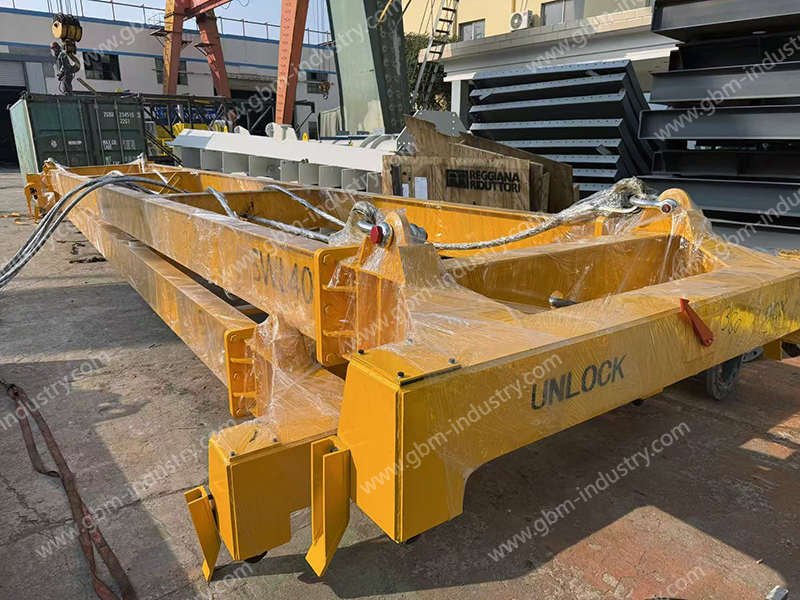
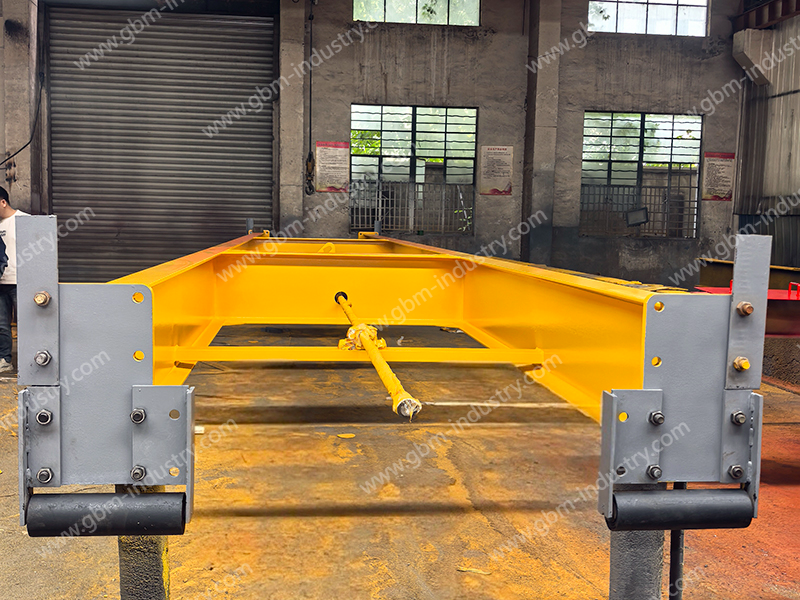
The solution we developed is elegantly simple. Instead of relying on forklift blades to slide or push spreader components into a container—where metal meets metal and paint suffers—we designed and installed custom rollers on key parts of the spreader structure.
How it works?
These rollers act as wheels. When it is time to pack the disassembled spreader components into a shipping container, the parts are placed on the rollers and rolled smoothly into position. The forklift still provides the pushing force, but the contact point is now between the roller and the container floor, not between the forklift blade and the spreader’s painted steel. The spreader itself never touches the forklift. There is no scraping, no gouging, no chipped paint.
Why this matters?
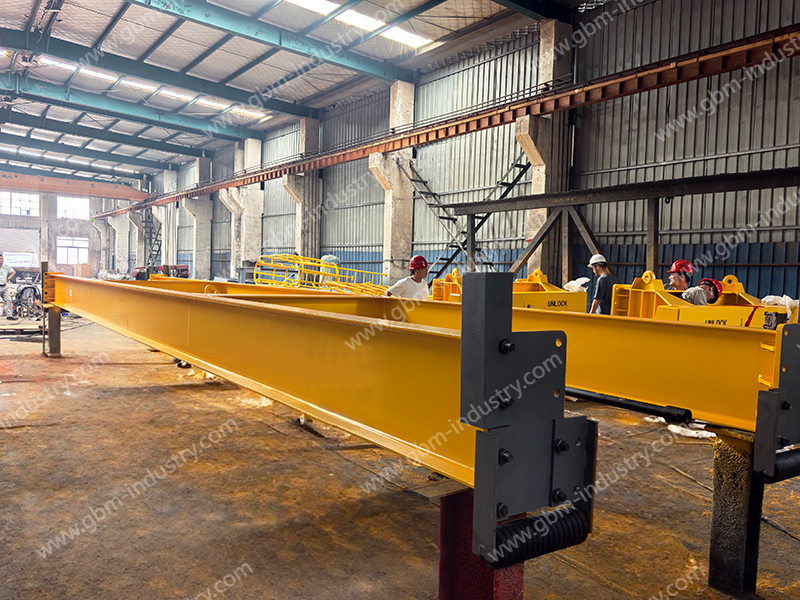
This might sound like a small detail, but in practice, it makes a world of difference. The spreader arrives at the customer’s site in the same condition it left the factory—pristine, properly painted, and ready for assembly. No touch-up work. No explanations needed. No disappointed customer opening a container to find scratches on their new equipment.
This roller design is not just a one-off fix. We recognized its value and formally filed for a patent to protect this innovation. It is now an official GBM design feature, and we are proud to say that this patent-pending solution sets a new standard for how container spreaders can be shipped safely.
Dismantle Design for Transport
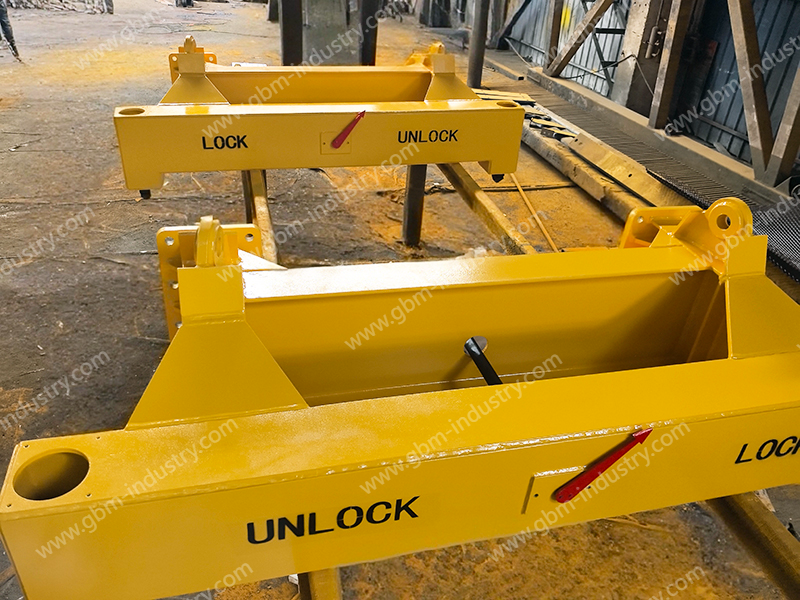
The Australian customer’s 40ft spreader is not a single, rigid 40-foot beam. That would be impossible to fit into a standard shipping container. Instead, GBM designed this spreader as a disassemblable unit . The main beam, the cross members, the twistlock assemblies—all are designed to come apart into manageable pieces.
Why dismantling matters
A 40ft spreader is roughly the same length as a 40ft shipping container. But a rigid frame would leave almost no clearance for packaging, padding, or safe handling. By designing the spreader to be disassembled, we achieve several things. First, the components fit neatly inside the container with room for protective packaging. Second, the weight is distributed across multiple smaller pieces, making handling safer and easier. Third, the customer receives a spreader that is easier to move around their own yard before final assembly.
The customer will receive a container filled with clearly labelled components, each one securely packed. Assembly is straightforward, following the detailed instructions we provide. In fact, the knockdown design is so effective that it has become a standard feature across many of GBM’s spreader products.
Packaging That Protects
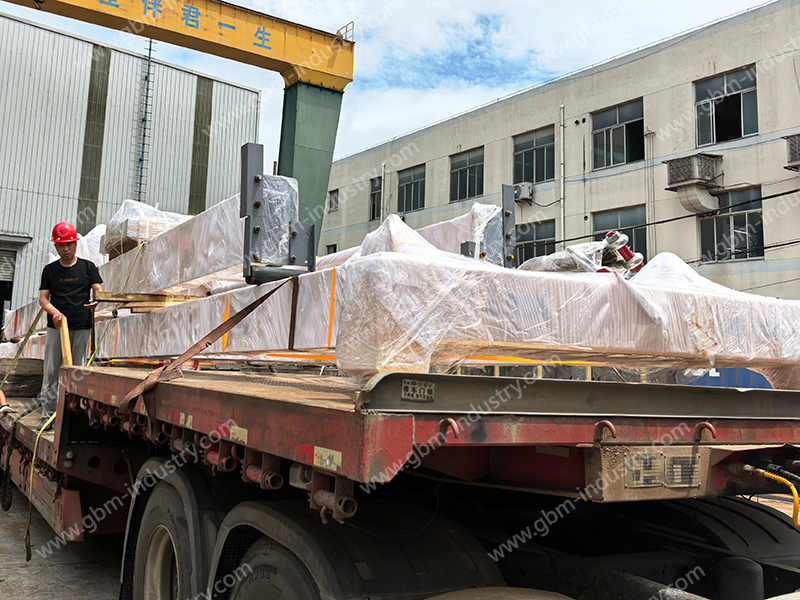
A dismantle design is only half the story. The other half is how those components are actually packed inside the container. GBM does not cut corners on packaging.
Padding and protection
All painted surfaces are covered with protective padding—foam, plastic sheeting, or stretch wrap—to prevent scratches from vibration or contact with other pieces. Small parts and fasteners are bagged and labelled, then placed in a locked box within the container. Nothing is left loose.
Clear labelling
Every component is clearly marked with its part number and assembly position. The customer does not have to guess which beam goes where. This reduces assembly time and eliminates the frustration of sorting through unmarked parts.
Innovation Comes from Listening
The roller design that we patented did not come from a lab brainstorming session. It came from paying attention to a real problem that our customers faced—and that we faced as a manufacturer. It came from asking, “How can we do this better?” and then having the engineering capability to make it happen.
If your operation needs a container spreader—whether 20ft, 40ft, or custom—and you want equipment that is designed with shipping and handling in mind, talk to GBM. We have the experience, the engineering depth, and the innovative mindset to deliver. Contact us today. Let us show you what thoughtful engineering looks like.