

With the continuous advancement of internet technology, the port and shipping industry has progressively evolved toward informatization, intelligence, and automation. In recent years, the global port industry has seen a growing demand for intelligent solutions, making the comprehensive management of vessel operations at container terminals within a networked environment a key research focus. However, as the shipping sector remains at a relatively low stage of development, most terminal operators lack robust information management systems for real-time tracking and monitoring of vessel operations. Consequently, fundamental data management—such as vessel counts and port entry/exit records—still faces numerous challenges.
Currently, most container terminals in China rely on traditional paper-based reporting and manual statistics to manage vessel operations. This approach not only results in low work efficiency but also leads to issues such as inaccurate and untimely data. To address these challenges and achieve informatization, intelligence, and automation in the full-process management of vessel operations at container terminals, it is recommended that relevant enterprises draw on the experiences of advanced foreign ports. Establishing management systems based on internet technology can enhance terminal management efficiency and standards. 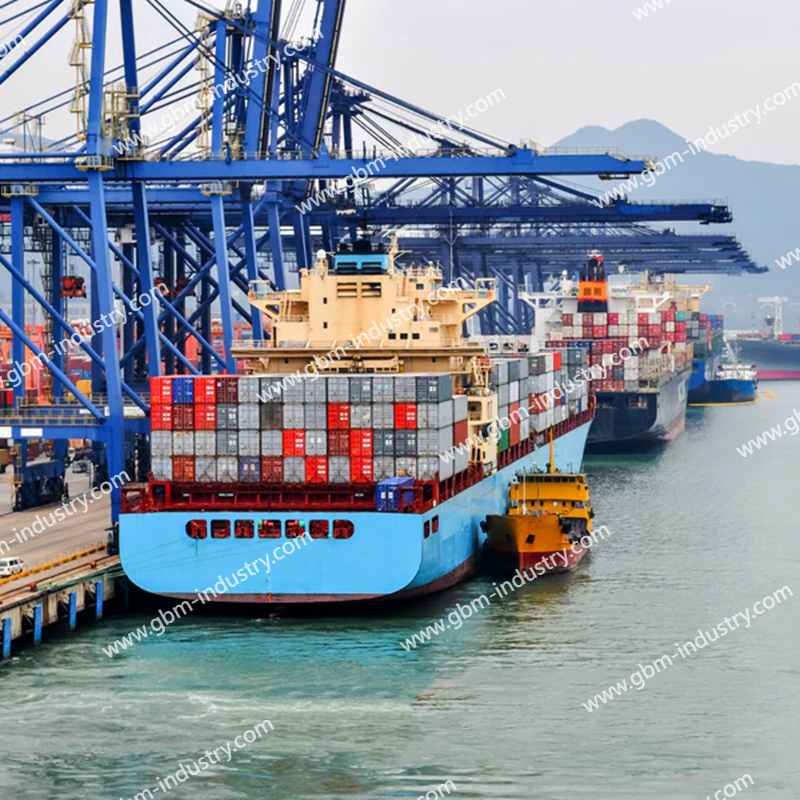
Research On Vessel Management In Network Environment
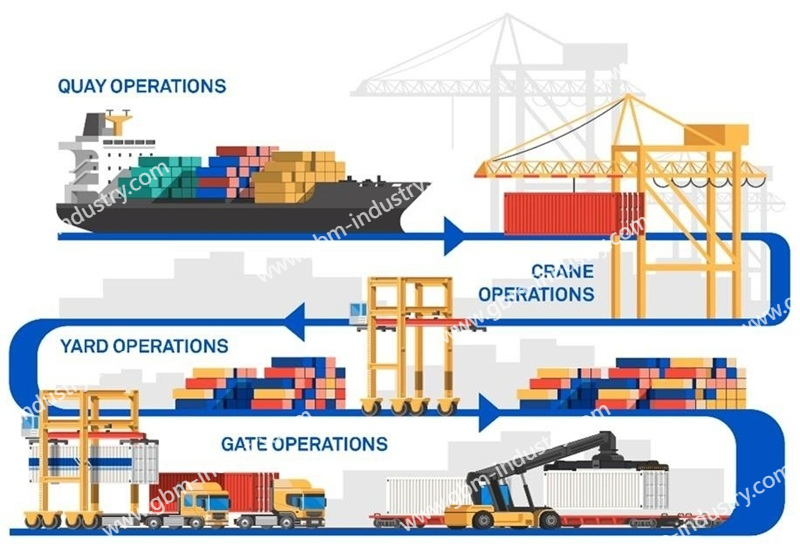
In recent years, the concept of vessel management within network environments has garnered increasing scholarly attention. Addressing shortcomings in traditional vessel management processes, researchers have proposed a series of solutions. Achieving comprehensive vessel operation management in a networked environment primarily involves two aspects: First, scientifically organizing and optimizing vessel operations within the networked environment, including port entry/exit management, terminal loading/unloading management, and yard operation management. Second, utilizing technologies such as big data and cloud computing to scientifically schedule and plan vessel operations, thereby optimizing operational efficiency. Additionally, some scholars have researched the rational layout of berths and port container facilities from the perspectives of port efficiency and feeder transport efficiency, proposing corresponding solutions.
Current Status of Container Terminal Ship Operations
The shipping industry has gradually become a vital sector in China’s national economic development. To better meet the shipping demands of economic development, relevant Chinese authorities have intensified support for the shipping industry, continuously refining policies to enhance container vessel transportation efficiency, thereby effectively driving China’s economic growth. In recent years, as the scale of container vessel transportation expands and international shipping market competition intensifies, container terminal enterprises have continuously optimized and upgraded their operational management models to boost competitiveness and market share. In this process, the application of information technology has significantly influenced the transformation of container terminal enterprises’ operational management models. Currently, the primary practices of Chinese container terminals in managing the entire vessel operation process include: First, utilizing information technology to monitor vessel operations within traditional management frameworks; second, employing information technology to organize and analyze vessel operation data; third, addressing issues arising during vessel operations within traditional management structures; Fourth, handling unexpected situations arising during vessel operations. While these measures have effectively enhanced container terminal vessel operation management, several pressing issues remain unresolved.
Ship Management at Container Terminals
Strengthening Ship Dynamic Tracking
Ship dynamic tracking refers to the real-time recording and monitoring of a vessel’s position, navigation trajectory, and other information during port entry and exit. This enables tracking of the vessel’s status, timely identification and resolution of issues during ship operations, and prevention of accidents. In current end-to-end vessel operation management, terminal personnel cannot track vessels’ movement trajectories in real time, making it impossible to promptly identify and address issues. Consequently, monitoring vessels’ navigation status remains unattainable. To resolve this, internet technology should be leveraged to provide docks with a platform for real-time vessel status monitoring. This platform would enable timely access to vessel location and navigation path data, along with continuous recording and surveillance of this information. Regarding platform development, internet technology can facilitate information transmission and sharing among different docks. When needing to understand the transportation status of all containers within a specific container terminal, relevant information can be obtained through the internet platform. Simultaneously, real-time monitoring of vessel status and navigation trajectories can be achieved. Under these circumstances, problems and potential hazards during vessel operations can be promptly identified and addressed, helping terminals enhance their service levels.
Info Sharing on Vessel Arrivals and Departures
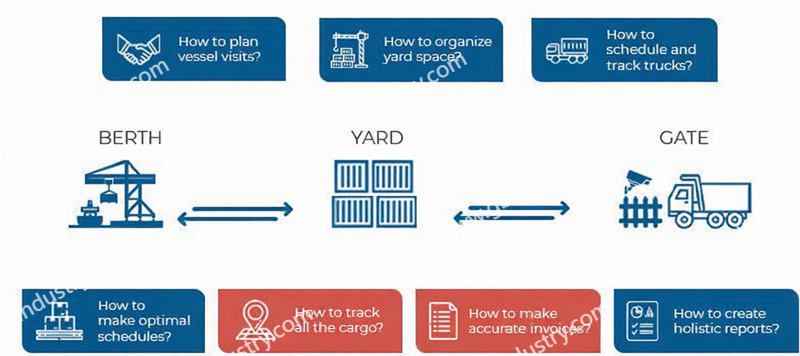
Sharing vessel arrival and departure information forms the foundation for managing the entire vessel operation process. Within existing terminal information systems, only internal operational data can be transmitted to external systems via networks—such as those used by truck drivers, yard workers, and stevedores—while external systems cannot interact with this operational data. Terminals cannot access external information during cargo handling, thereby impacting the management efficiency of vessel operations. To address this, terminals can establish a comprehensive port vessel information system to enable data interoperability between the terminal and external systems. Simultaneously, this system can serve as a management platform for the entire vessel arrival/departure process and an information bridge within the container transport network. It helps users better understand the entire cargo transportation process, including vessel arrival/departure status, cargo loading/unloading status, personnel involved, and yard operations.
Closed-Loop Management for Ship Operation Process
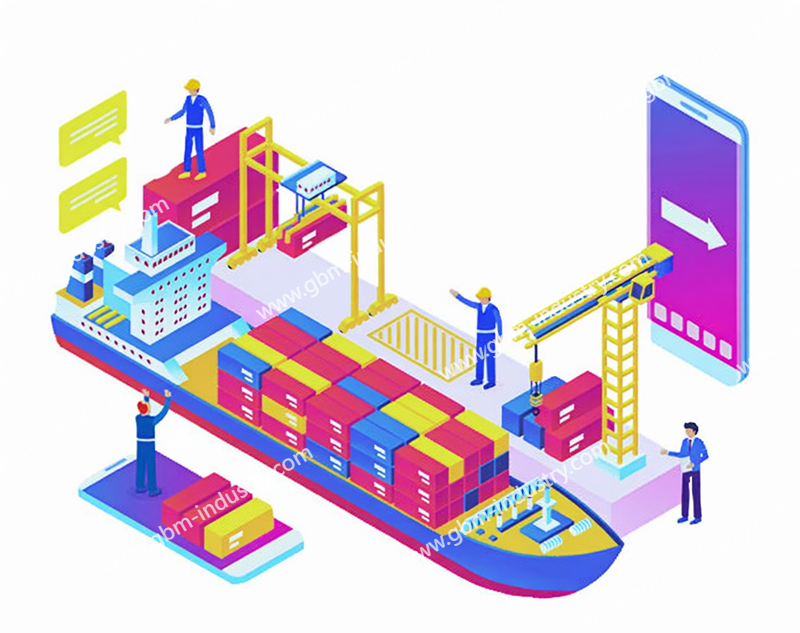
Under internet technology conditions, information-based methods must be utilized to achieve closed-loop management of the entire ship operation process at container terminals. First, during ship operations, terminal personnel must collect and update real-time data on ship arrivals/departures, operation times, container information, etc., and upload this data to corresponding databases via internet technology. Second, management personnel must conduct real-time monitoring and feedback throughout the entire vessel operation process, promptly resolving and addressing any issues that arise. Finally, management personnel should utilize internet technology to obtain relevant vessel operation data in a timely and accurate manner, making corresponding decisions based on actual conditions to enhance the operational efficiency and service level of the container terminal. Additionally, to boost vessel operation efficiency, managers must further optimize and transform container terminal business processes. This ensures vessel operations are completed within reasonable timeframes, enhances operational safety, and reduces the likelihood of issues during vessel handling.
Dynamic Management of Shipping Companies
Shipping companies are vital clients for terminals. Currently, China’s container terminals face numerous small-scale shipping companies that generally lack scientific management systems. Enhancing dynamic management of these companies can effectively reduce terminal operating costs. Dynamic management encompasses: First, establishing a foundational database for shipping companies and integrating vessel information through network technology to enable sharing of vessel and operational data. Second, strengthening assessments and oversight of shipping companies; those failing to arrive at the terminal within stipulated times or complete operations promptly may face reduced operational costs to a certain extent.
Third, analyzing and researching shipping company operations to establish a rational assessment indicator system and evaluation framework, developing scientific incentive programs based on actual company conditions; Fourth, analyzing and summarizing issues encountered by shipping companies to develop tailored countermeasures based on different causes, achieving refined management; Fifth, establishing a vessel information feedback mechanism where terminal staff promptly and accurately report vessel operation status to shipping companies, enabling them to understand their responsibilities and obligations, thereby effectively addressing issues such as low management standards and efficiency in China’s container terminal vessel operations.
GBM Tech: Safety & Smart Efficiency Enhancement
As network technology becomes deeply integrated into container terminal operations management, the intelligent and networked integration of operational equipment itself has become a critical factor in enhancing overall efficiency and safety. As a professional supplier of container spreaders and terminal handling solutions, GBM is committed to deeply integrating cutting-edge technology into product design and system solutions, actively responding to the safety and smart management demands for the entire vessel operation process in a networked environment. GBM’s intelligent spreader series integrates high-precision sensors and IoT communication modules to monitor real-time spreader status, load data, spreader head movements, and abnormal vibrations. This information is transmitted via internal terminal networks or 5G private networks to central dispatch systems, providing reliable data foundations for achieving “dynamic tracking” and “closed-loop management” of vessel operations.
On the safety front, GBM spreaders feature intelligent anti-sway control systems, precise positioning, and collision warning capabilities. Through data analytics, they enable predictive maintenance, providing early warnings of potential equipment failures and significantly reducing operational interruptions and safety incidents caused by sudden equipment issues.
Conclusion
With the continuous advancement of information technology, achieving comprehensive management of the entire ship operation process at container terminals under networked conditions has become an inevitable trend. This paper proposes corresponding solutions to existing challenges in the comprehensive management of vessel operations at container terminals. Building upon this foundation, it recommends establishing an internet-based management platform. It is hoped that these insights will provide valuable reference and guidance for relevant enterprises, thereby enhancing the comprehensive management level of vessel operations at Chinese container terminals and promoting their healthy and rapid development.