

With the rapid development of the construction industry, the consumption of cement—the most critical building material—is increasing annually. Consequently, the construction of large-volume cement storage tanks (capacity exceeding 1000 tons) in major and medium-sized cities is also growing year by year.
Working Principle For Cement Storage Silo
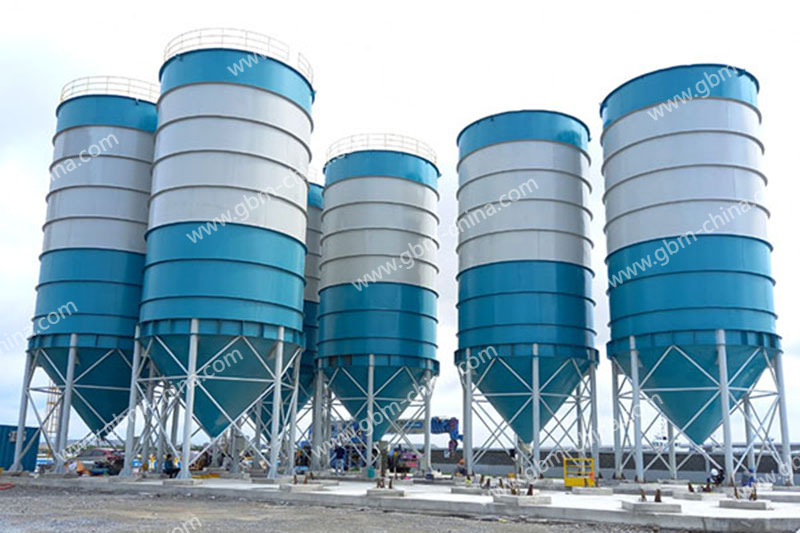
Given their substantial storage capacity, these cement silos are typically constructed adjacent to dedicated railway lines to accommodate bulk transportation requirements. The entire storage system comprises several key components: the silo body system, level measurement system, dust collection system, pneumatic conveying system, railcar marshalling system, discharge system, and lightning protection system. The operational principle is as follows: First, the railcar dispatch system moves the railcar awaiting unloading to a designated position. One side is connected to the air duct of the pneumatic conveying system, while the other side links to the cement delivery pipeline of the silo system. Compressed air atomizes the cement. Once it reaches a certain pressure, the cement flows through the pipeline into the silo. The amount of cement inside the silo can be displayed via the level measurement system. The discharge system transfers cement from the silo into bulk cement trucks.
Equipment Selection Guidance
Silo Selection
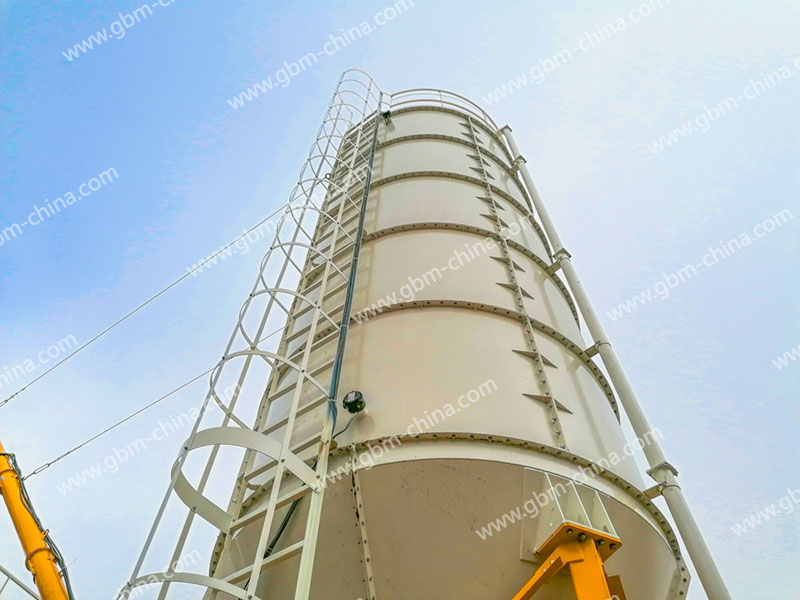
Silos typically come in two forms: reinforced concrete silos and steel structure silos. Reinforced concrete silos offer excellent durability, require no anti-corrosion treatment, and have low maintenance costs, making them popular among cement manufacturers. Their disadvantage is that they become worthless when the building reaches the end of its service life. Steel silos also come in two types: one is traditionally manufactured by welding steel plates, using relatively thick plates (4–12 mm). For example, a 14m diameter, 5,000t silo requires approximately 200t of steel. The other employs a new process using 4 mm thick steel plates formed by spiral curling, with a 25 mm thick, 20 mm wide rib reinforcement every 300 mm. This method requires only about 70 tons of steel. Therefore, the latter significantly reduces costs compared to the former. Steel silos can be constructed year-round, and retain considerable value at the end of their service life. However, their durability is inferior to reinforced concrete silos, and maintenance costs are relatively higher. This type of silo is also widely adopted by cement distributors. Ash conveying pipelines within the silo system typically use seamless steel pipes with an inner diameter of 159 mm.
Assisted Blowing System
The assisted blowing system plays a crucial role in large-volume cement storage systems. Bulk cement in railcars is atomized using compressed air and then conveyed into storage silos at a pressure of approximately 0.3 MPa. The core equipment of the assisted blowing system is the air compressor. Air compressors are primarily of two types: screw-type and piston-type. Screw-type compressors feature low noise, rapid pressure startup, and low maintenance costs, but they are very expensive. This type of compressor is rapidly gaining market share. Piston-type air compressors are cost-effective and easier to maintain, making them widely adopted in major factories and mines. For large-volume bulk cement silos, piston-type air compressors are recommended after comprehensive consideration. During air compressor procurement, careful selection of auxiliary equipment is essential. Among these, dryers and liquid-air separators are particularly important. Since cement hardens upon contact with water, moisture and water vapor in compressed air are highly detrimental during cement storage. Therefore, these two devices play a critical role in removing water vapor and water from compressed air. If feasible, a high-efficiency oil separator should also be installed.
Dust Collection System
During cement filling into silos, air must be promptly evacuated from the silo to prevent significant negative pressure that could hinder filling. This exhaust process generates substantial dust, necessitating a dust collection system to meet environmental standards. The filter elements in the dust collector must deliver excellent filtration performance, high efficiency, and extended service life. Dust control is closely related to the material’s particle size distribution, mass, particle dimensions, and movement velocity. Polyester non-woven fabric is currently widely adopted globally as filter media material. This material features excellent air permeability, strong dust capture capability, high filtration precision, flexibility, and ease of forming, contributing to its widespread application. Therefore, when selecting a dust collector, prioritize this type. Furthermore, determine the required dust collection area before making a selection.
Discharge System
The discharge system transfers bulk cement from storage silos into bulk cement tankers or other containers. It comprises components such as silo bottom discharge machines and Roots blowers. The silo base plate is conical to facilitate smooth cement flow from the discharge port. Pneumatic plates are systematically distributed across the conical base plate. These plates connect to air ducts below, using compressed air to reduce friction between cement and the silo base, ensuring uninterrupted discharge.
Level Measurement System
The level measurement system’s function is straightforward: to accurately reflect the current amount of cement stored in the silo at all times. Various level gauges exist, including weight-type, pressure-type, and radar-type. Among these, radar-type level gauges are widely adopted by many users due to their compact size, simple operation, and measurement accuracy.
Car Shunting System
An effective car shunting system is crucial for enhancing unloading efficiency. This system comprises a reducer, movable pulley, fixed pulley, steel wire rope, and counterweight. Its structure is relatively simple: an electric motor drives the reducer, which operates the movable and fixed pulleys to shunt cars forward and backward. When selecting a transfer winch, consider the following: First: Traction force; the winch must provide at least 14 tons of traction force. Second: Motor power. A winch capable of 14 tons of traction should have a motor power of approximately 30 kW. Third: Wire rope diameter. The wire rope diameter must be at least 24 mm. Fourth: Moving and fixed pulleys. The moving pulley prevents wire rope entanglement and requires a diameter of 1.6–2.0 m to meet requirements. The fixed pulley alters the wire rope’s force direction, with a diameter of 500 mm being sufficient.
Lightning Protection System
Given the substantial height of large-volume cement silos, lightning protection is critical, particularly for steel-structured tanks. Designing the lightning protection system and selecting equipment must strictly adhere to the Building Lightning Protection Design Code. Lightning rods, down conductors, and grounding devices must be selected and installed according to specifications. Particular attention must be paid to measuring ground resistance with instruments per regulations. Although the lightning protection system is relatively simple, it demands full attention and adequate emphasis.
GBM–System Integration Advantages
As a long-term core equipment supplier to the cement industry, GBM specializes in providing cement producers with one-stop system solutions spanning storage, transportation, and plant construction. In the field of large cement silos, GBM leverages its mature design capabilities and sophisticated manufacturing processes to offer customized silo solutions, including steel silos. GBM silos employ advanced spiral-wound plate technology and reinforced rib designs, ensuring structural stability and safety while significantly reducing steel consumption and construction costs. For critical subsystems such as aeration, dust removal, discharge, and level monitoring, GBM provides fully integrated equipment with performance compatibility and standardized interfaces, guaranteeing efficient and coordinated operation of the entire storage system.
Beyond core silos, GBM specializes in designing and constructing steel-structured factory buildings for cement plants. These structures are flexibly customized according to process layouts and spatial requirements, enabling seamless integration between storage systems and production workshops to enhance overall logistics and functional integration within the plant.
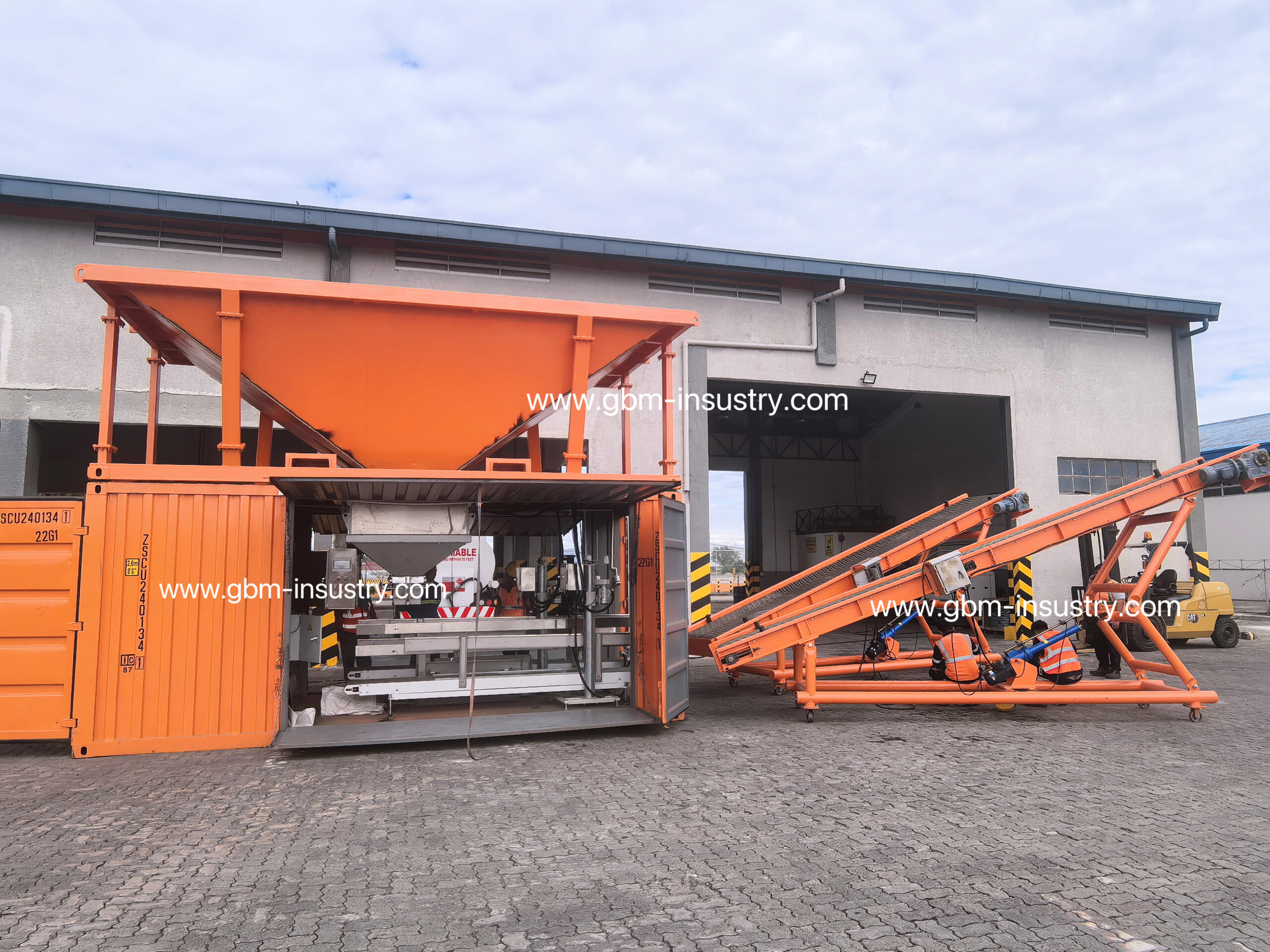
For material transfer operations, GBM supplies a range of high-performance conveying equipment, including grab buckets for bulk material handling, ergonomically designed discharge hoppers, and belt conveyors in various specifications. These devices emphasize meticulous details: wear-resistant liners inside hoppers minimize material adhesion and abrasion, while optimized roller configurations in conveyor systems reduce deviation and spillage risks, ensuring continuous and reliable cement material flow throughout the plant.
GBM’s core competitiveness lies in its deep industry expertise and robust customization capabilities. The company tailors designs for silo capacity, discharge angles, dust removal airflow, and conveying routes based on specific material properties, site conditions, and production capacity requirements, ensuring optimal overall system performance. Simultaneously, GBM consistently prioritizes high quality as its foundation. From raw material procurement and precision manufacturing to rigorous factory inspections, it has established a comprehensive quality control system. This guarantees long-term durability and low failure rates for its equipment, creating sustained and stable production value for customers.